Vertical blinds are made from a row of long, hanging vanes that tilt to control light and slide to one side, or split in the middle, to clear the opening. They are most often chosen for patio doors, sliding doors and wide windows, where a single flat blind would be awkward to lift every time someone walks through. They are not the softest-looking window treatment, and they are not the best choice for every window, but for a wide expanse of glass they are often the most practical option.
What are vertical blinds?
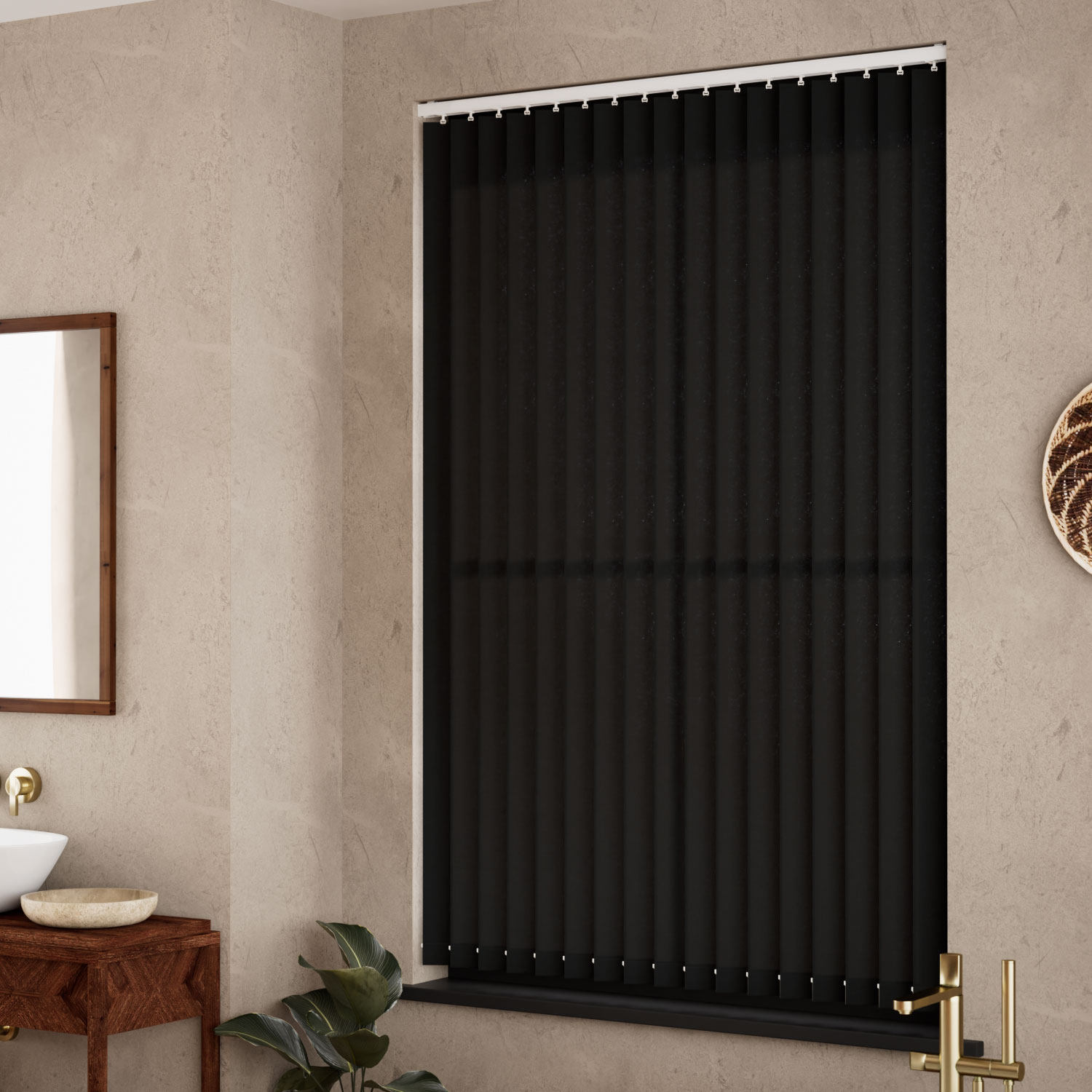
Each vane hangs from a headrail, or track, fixed above the window or door. A wand or chain tilts the vanes, and a cord or wand draws them across or stacks them to the side. When the vanes are open, light passes between them. When they are turned, they overlap and block the view in, while still allowing some control over how much daylight enters.
The vanes themselves are usually fabric, PVC, or a fabric with a PVC backing. Fabric vanes give a softer appearance and a wider choice of textures and patterns. PVC vanes are firmer, easier to wipe, and better suited to rooms where splashes and steam are likely. The headrail is the part that does most of the work, so its quality matters more than it first appears: a smooth, well-fitted track makes daily use noticeably easier, especially on a door that is opened often.
What problems do vertical blinds solve?
The main problem is width. A patio door or a floor-to-ceiling window is too wide for most single blinds to cover neatly, and a treatment that has to be raised fully before the door can be used quickly becomes a nuisance. Vertical blinds move in the same direction as a sliding door, so they can be drawn aside without being lifted out of the way.
They also solve a common light problem on large glazing: full sun through a wide window can create glare on a television or screen and make a room feel exposed. Tilting the vanes lets you cut glare and keep some daylight, rather than choosing between a fully open window and a fully covered one. A third problem is privacy on a ground-floor opening. Closed vanes give daytime privacy without making the room dark, provided the right fabric is chosen.
Key Benefits
Control across a wide opening. Vanes can be tilted in small increments, so you can adjust light through the day as the sun moves. You can also draw the blind only part-way across, which is useful when you want light on one side of a room and shade on the other.
Easy access through doors. Because the blind stacks to the side, you can walk through a patio or French door without lifting a heavy blind or pushing fabric aside. Split-stack options, where the blind parts in the middle, can suit a door that opens from the centre.
Practical coverage for bay windows. A made-to-measure vertical blind can follow the shape of a bay more readily than a single rigid treatment. Each section can still be operated, which helps when one part of the bay catches more sun than another.
Lower dust build-up than horizontal slats. Dust settles less readily on a vertical surface, so vanes often need less frequent dusting than horizontal slats — though fingerprints, pet contact and cooking grease still show.
Individual vane replacement. If one vane is damaged or stained, it can often be replaced without replacing the whole blind. Confirm this for the specific range chosen, as fixings vary.
Where vertical blinds work best
Patio and French doors
This is the strongest use case. The blind follows the door, stacks clear of the handle, and can be left partly drawn for ventilation while still giving privacy. Check handle clearance and how far the door opens before choosing the stack side, so the blind does not sit in front of the handle or block the door swing.
Living rooms
Vertical blinds suit a large living-room window or a set of sliding doors onto a garden. They look most at home in a room with a clean, contemporary feel. In a smaller living room with a single standard window, they can dominate the wall, so the proportion of the window to the room is worth checking at the consultation.
Bedrooms
Vertical blinds can work in bedrooms, particularly with blackout or dim-out fabrics, but they are not the same as a fully blackout treatment. Small gaps between vanes and at the edges can let in light, especially in the early morning. If darkness is the priority, discuss blackout vanes, a close-fitting track, and whether a second layer, such as curtains, would help.
Kitchens
PVC vanes are the sensible choice here. They can be wiped after cooking splashes, and they do not absorb steam in the same way as an uncoated fabric. Fabric vanes in a kitchen will show grease and marks more readily, and cleaning them is slower.
Bathrooms
Again, PVC or a moisture-resistant fabric is the safer route. A bathroom window is often smaller, so vertical blinds are not always the best proportion for the opening, but for a larger bathroom window or a window above a bath, they can give privacy without a heavy fabric treatment. Ventilation matters: a blind that stays damp will not last as well, whatever the material.
Bay windows
Made-to-measure vertical blinds can be fitted around a bay, with each section following its own window. The key detail is the headrail: it needs to be measured and fitted so the vanes meet neatly at the angles, rather than leaving gaps or overlapping awkwardly.
Conservatories
Conservatories often have long runs of glazing, and vertical blinds can cover them without the weight and bulk of a long curtain. Heat and glare are common conservatory complaints, so fabric choice matters here — a light-filtering or solar-reflective fabric, where available in the range, will behave differently from a plain dark fabric. Ask to see samples in the room itself, as conservatory light changes sharply through the day.
Privacy and light control
During the day, tilted vanes give a useful balance: you can see out and let daylight in while making it harder for someone outside to see in clearly. The exact balance depends on the fabric, the angle of the vanes, and how close someone is to the glass.
At night, when lights are on inside, the position reverses. A light-filtering fabric that gives good daytime privacy will not give the same privacy after dark. For night-time privacy, closed vanes in a denser or blackout fabric are needed, and even then small gaps at the edges and between vanes can show. Blackout vertical blinds reduce light considerably, but the construction — separate vanes rather than a single sheet — means they rarely achieve the same edge-to-edge darkness as a well-fitted blackout roller blind or a lined curtain.
Thermal performance and energy efficiency
Vertical blinds can help with comfort, but they should not be sold as insulation on their own. Closed vanes reduce direct sun in summer and can reduce draughts felt near a window in winter, but there are gaps around the headrail, sides and between vanes. A blind that does not sit close to the glass, or that leaves a wide gap at the bottom, will do less than a close-fitting treatment. Fabric choice makes a difference: a denser fabric blocks more sun than a sheer one, and a light-coloured vane reflects more daylight than a dark one. No specific saving on heating bills should be promised from vertical blinds alone.
Materials, fabrics, colours and finishes
Fabric vanes come in plains, textures, jacquards and patterned designs. They give the softest appearance and the widest decorative choice, but they need more careful cleaning and are more likely to show marks from hands and pets. PVC vanes are firmer and wipe clean, available in plain and textured finishes, and in white and neutral tones that suit kitchens, bathrooms and high-traffic doors. They can look more functional than fabric, which is a fair trade-off in a room where durability matters more than softness.
Blackout and dim-out fabrics sit between these options. A blackout vane is usually a fabric with a coating or backing that blocks light. A dim-out fabric reduces light without blocking it fully. The names vary between suppliers, so it is worth checking a sample against the actual window light rather than relying on the label alone. Headrail and wand or chain finishes are usually neutral — white, silver or a similar tone — and the headrail can be covered with a fabric valance if the track itself is not wanted on show.
Made-to-measure vs ready-made
Ready-made vertical blinds are made to standard sizes and may need to be trimmed or fitted with a compromise on width or drop. On a narrow window, that compromise may be minor. On a wide patio door, it is more visible: vanes that do not meet the floor or the side of the frame evenly, or a stack that does not clear the door, will be noticed every day.
Made-to-measure vertical blinds are made to the measured opening, with the stack direction, control side and vane length chosen for that door or window. Professional measuring also takes account of handles, skirting, radiators and the way the door opens. For a bay or a conservatory, where the angles and lengths vary, made-to-measure is usually the more reliable route.
Things to consider before choosing vertical blinds
Window width and proportion. Vertical blinds need enough width to look balanced. On a very narrow window, the vanes and headrail can overwhelm the opening.
Stack direction and space. Decide whether the blind stacks left, right or in the middle, and check there is wall or frame space for the stack when it is open.
Door handles and opening direction. A handle that projects into the blind, or a door that opens inward, can catch vanes. This should be checked at measurement, not after fitting.
Draughts and movement. Vanes can sway and tap in a draught or under a ceiling fan. In a quiet bedroom, that movement can be noticeable.
Children and pets. Long vanes attract attention from small children and pets, and cords and chains should be kept out of reach. Cordless or wand-operated options are worth discussing for a family home.
Radiators and heat sources. A radiator directly below a window can push warm air up through the vanes and increase movement.
Colour in strong light. Very dark vanes can make a room feel smaller and can show dust more readily in bright light. Very light vanes can show marks. Seeing samples in the room's own light helps more than seeing them in a showroom.
Potential disadvantages / when another blind may be better
Vertical blinds are not the right answer for every room. Their look is functional and contemporary, and in a period interior or a room where a softer fabric treatment is wanted, they can feel out of place. Roman blinds or curtains may suit that room better, even if they are less practical for a door. They can be noisy in a breeze, and the vanes can be knocked out of alignment by pets or by walking through them carelessly. They do not give complete blackout, and they do not give the same precise, small-scale light adjustment as a tilting horizontal slat.
For a small, standard bedroom window, a roller blind or a Roman blind may be simpler, quieter and better proportioned. For a door that is rarely used, curtains or a panel blind may give a softer look.
Vertical blinds vs similar alternatives
| Feature | Vertical blinds | Roller blinds | Plantation shutters |
|---|---|---|---|
| Best for | Wide windows, patio and sliding doors | Single windows, bedrooms, simple coverage | Individual windows, a framed, permanent look |
| Access through a door | Stacks to the side, easy | Must be raised to walk through | Panels open, but take up space when open |
| Light control | Tilt vanes, draw partly across | Raise or lower a single sheet | Tilt louvres within a frame |
| Blackout | Good with blackout vanes, but gaps remain | Strong with a blackout fabric and close fit | Good, but light can pass around louvres |
| Look | Functional, contemporary | Clean, minimal | Structured, traditional or contemporary |
Panel blinds are another alternative for very wide glazing, with large fabric panels that slide across. They give a cleaner, more minimal look than individual vanes, but they do not offer the same fine tilt control.
Measuring and professional fitting
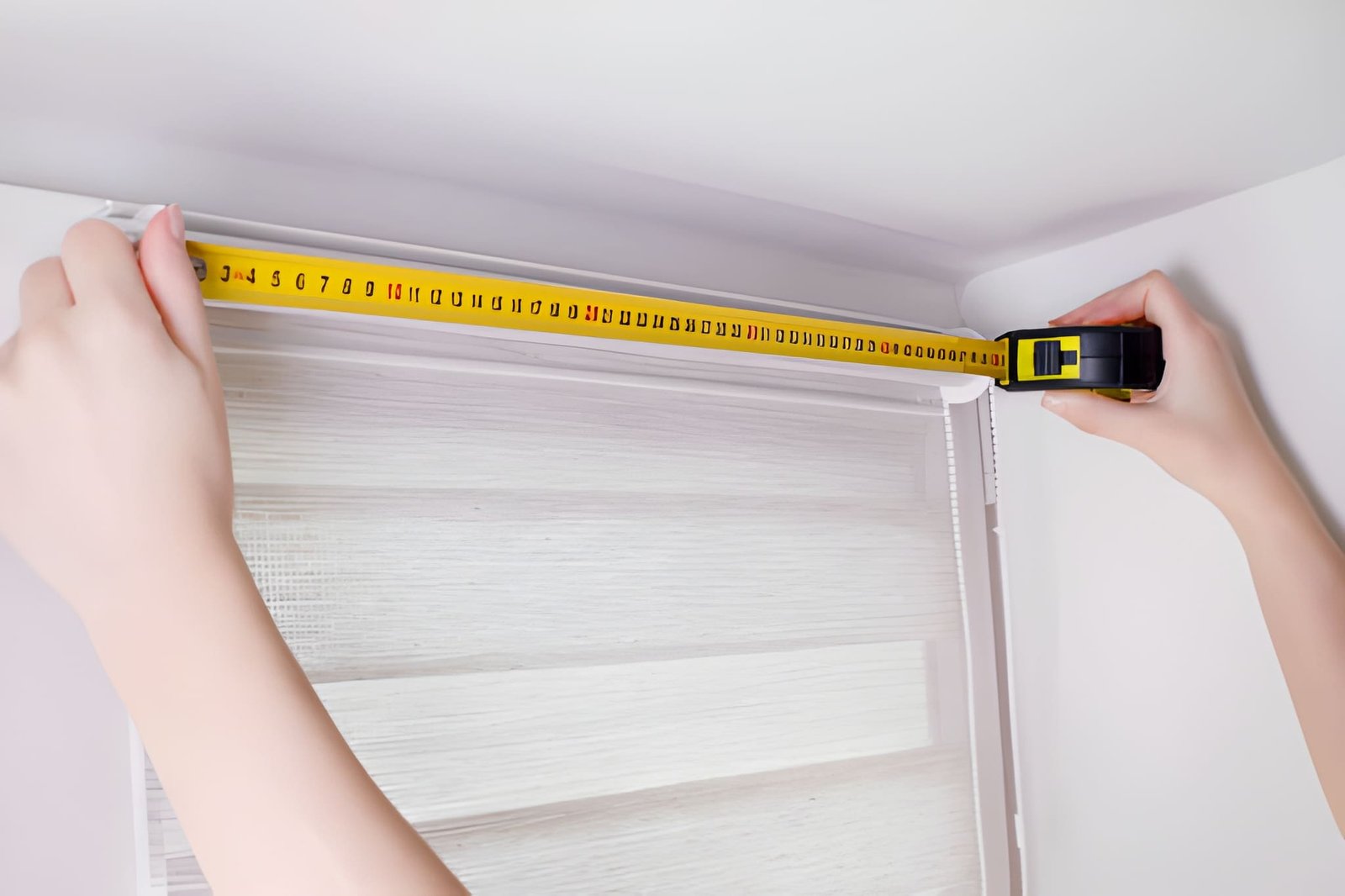
A home consultation for vertical blinds usually follows a straightforward sequence. First, the room and the opening are discussed: how the door or window is used, what privacy and light are needed, and whether the blind will be used mainly tilted, closed or drawn aside. Next, fabrics and colours are compared in the room's own light, with the headrail and control options explained. Measurement then takes account of the width and drop, the recess, handles, skirting and any obstructions. The blind is made to those measurements, and fitting includes fixing the headrail level, hanging and aligning the vanes, and checking that the blind draws and tilts smoothly without catching. Dream Blinds UK offers a home consultation and measuring service in Bradford and the surrounding West Yorkshire area, which is particularly useful for patio doors and bays, where a small measuring error is visible across a wide opening. No DIY measurement tolerances are given here, because they vary by product and fixing.
Cleaning and maintenance
Vacuum vanes gently with a brush attachment, or wipe them with a dry microfibre cloth. For PVC vanes, a damp cloth with a small amount of mild detergent will deal with most marks, followed by drying to avoid water spots. Avoid abrasive cleaners and harsh chemicals. Fabric vanes should be spot-cleaned rather than soaked, unless the manufacturer's care instructions for that specific fabric say otherwise. Blot a mark gently with a damp cloth and mild detergent, testing first in an inconspicuous area, and allow the vane to dry fully. Do not tumble-dry vanes, and do not use hot water or steam unless the care label allows it. Dust and debris in the track can make the blind drag, so a soft brush and a dry wipe every few months helps keep movement smooth.
Who should choose vertical blinds?
Vertical blinds may suit you if you have a patio door, sliding door or wide window that needs daily access; want to tilt for light and privacy without raising a blind fully; need a practical, wipeable option for a kitchen, bathroom or high-traffic door; have a bay or conservatory with long runs of glazing; or want the option to replace a single damaged vane rather than a whole blind. They may be less suitable if you want complete blackout, a soft fabric look for a small window, or a treatment that is silent in a draughty room.
See samples in your own home — book a home consultation to compare vertical blind fabrics against the actual light in the room.
FAQs
Are vertical blinds good for patio doors?
Yes, patio doors are one of the strongest uses for vertical blinds. The vanes move in the same direction as a sliding door and stack to the side, so you can walk through without raising the blind. Check handle clearance and stack direction at measurement so the blind does not block the door.
Do vertical blinds give privacy at night?
Closed vanes in a dense or blackout fabric give good night-time privacy, but light-filtering fabrics that work well in daytime will not give the same privacy after dark when lights are on inside. Small gaps between vanes can also show. For a bedroom or a street-facing room, a denser fabric is the safer choice.
Can vertical blinds be blackout?
Blackout vanes reduce light considerably, but because vertical blinds are made from separate vanes, they rarely achieve complete edge-to-edge darkness. Gaps between vanes and at the edges can let in light. If total darkness matters, discuss this openly and consider whether a second layer would help.
Are vertical blinds suitable for bedrooms?
They can be, especially with blackout or dim-out fabrics, but they are not the quietest option in a draughty bedroom, as vanes can move and tap. For a small bedroom window, a roller or Roman blind may be better proportioned. For a wide bedroom window or a door, vertical blinds are more practical.
Are vertical blinds suitable for kitchens and bathrooms?
PVC vanes are well suited to kitchens and bathrooms because they wipe clean and handle steam and splashes better than uncoated fabric. Fabric vanes in these rooms will show grease and marks more readily and take longer to clean.
Can you replace a single vertical blind vane?
In many ranges, yes. A damaged or stained vane can be unclipped and replaced without replacing the whole blind. Fixings vary by manufacturer, so confirm this for the specific product and keep a note of the fabric name and colour for an exact match.
Do vertical blinds work on bay windows?
Made-to-measure vertical blinds can be fitted around a bay, with each section following its own window. The headrail needs to be measured carefully so vanes meet neatly at the angles. This is a job where professional measuring makes a real difference.
How do you clean vertical blinds?
Vacuum gently with a brush attachment or wipe with a dry microfibre cloth for routine care. PVC vanes can be wiped with a damp cloth and mild detergent, then dried. Fabric vanes should be spot-cleaned and allowed to dry, following the manufacturer's care instructions for that fabric.
Do vertical blinds block heat?
Closed vanes reduce direct sun and can make a room feel cooler, but they are not insulation on their own. Gaps around the headrail and between vanes limit their effect. Fabric colour and density matter, and whether the blind is actually closed during the hottest part of the day matters just as much.
Are vertical blinds out of date?
The basic idea has been around for a long time, but modern fabrics, textures and headrails look very different from older, flimsy plastic versions. The question is less about fashion and more about fit: on a wide opening, they still solve a practical problem that softer treatments do not solve as neatly.