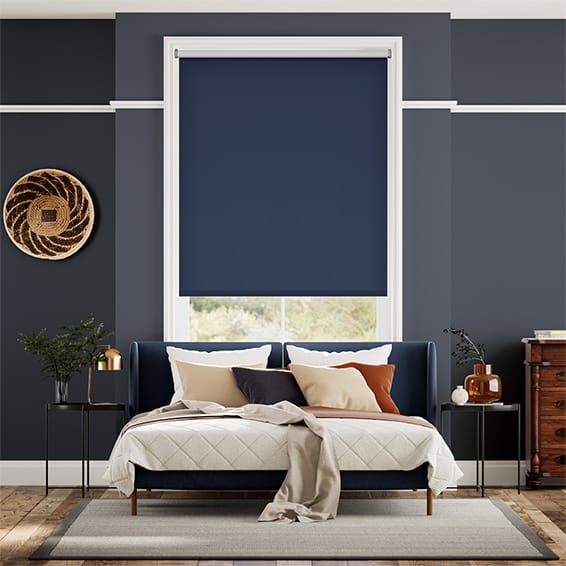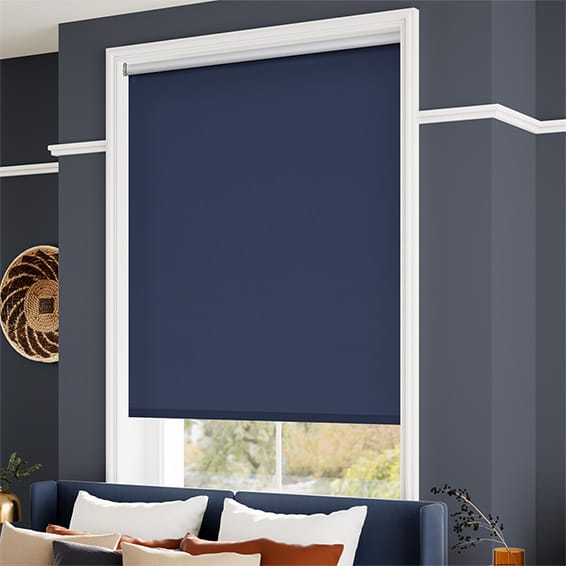
A roller blind is a single panel of fabric that winds around a horizontal tube at the top of the window. Pull it down for privacy, shade, or darkness; roll it up and it sits as a compact roll, leaving most of the glass clear. That simplicity is the point. There are no slats to tilt, no folds to stack, and no bulky fabric hanging at the sides when the blind is open. The result depends less on the mechanism — which is straightforward — and more on two choices: the fabric, and how well the blind is fitted to the window. Get those right, and a roller blind can handle bedrooms, kitchens, bathrooms, wide windows, and patio doors without drawing attention to itself.
What are Roller Blinds?
A roller blind has four main parts: a fabric panel, a roller tube, a bottom bar that keeps the fabric hanging straight, and a control — usually a side chain, a cordless spring system, or a motor. Some blinds have an open roller, where the tube is visible; others sit inside a cassette or fascia that covers the tube and gives a tidier finish at the top of the window.
When the blind is lowered, the fabric hangs flat against the window. When it is raised, it rolls up tightly, so only a small roll remains at the top. That low profile is one reason roller blinds suit smaller rooms and windows where curtains or deep folds would crowd the space.
Operation is deliberately simple. A chain control moves the blind up or down and holds it at the height you choose. A cordless option removes the loop altogether. Motorised operation, controlled by remote, is useful for wide blinds, high windows, or doors where reaching a chain would be awkward.
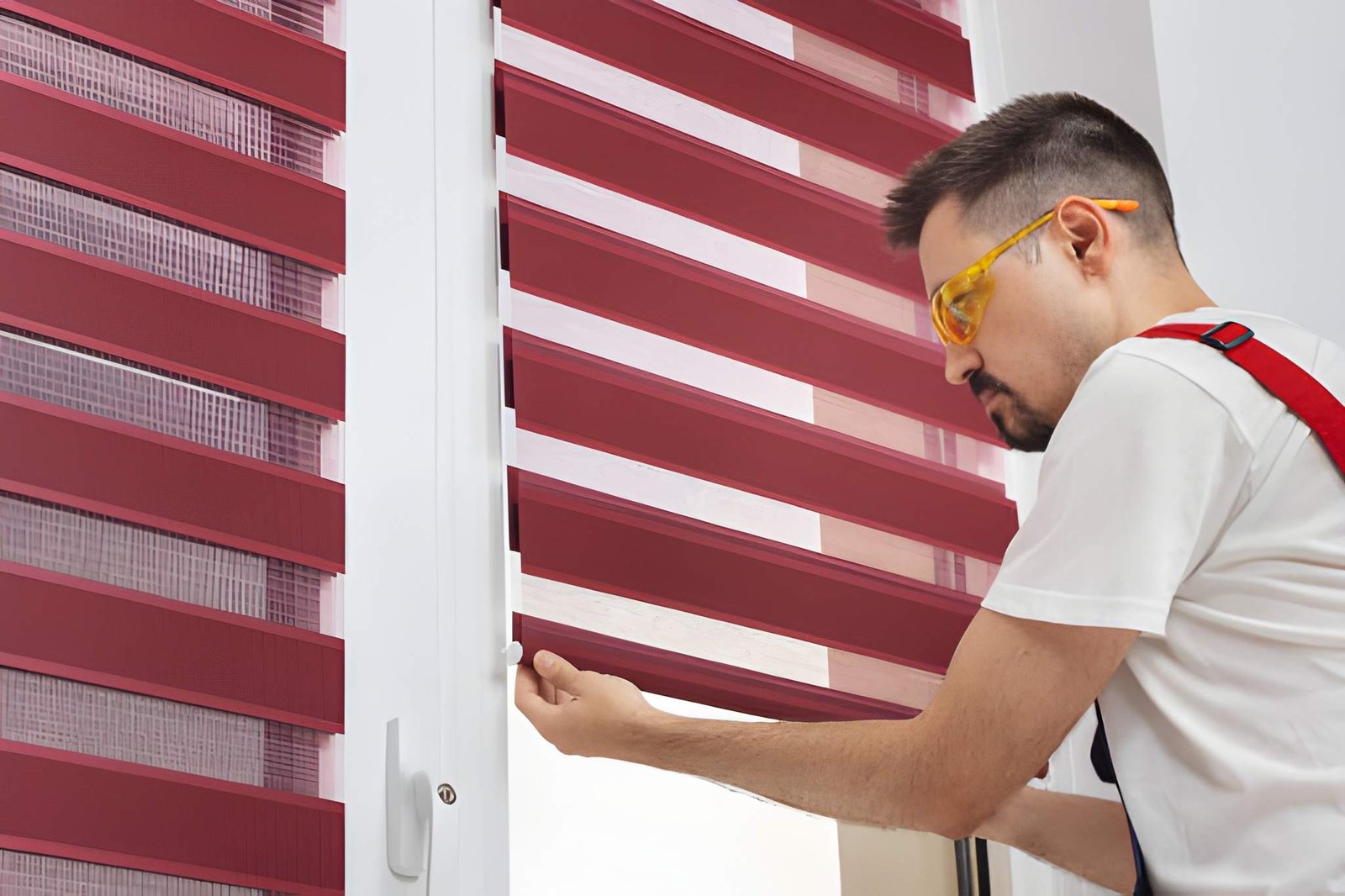
Roller blinds are also available as dual or day-and-night systems, where two layers of fabric — typically a sheer or voile stripe alternating with a solid stripe — move past each other. Aligned one way, they filter light; aligned the other, they close up for more privacy and darkness. They are still roller blinds in construction, but they answer a different need from a single fabric panel.
What problems do they solve?
Roller blinds solve a practical set of everyday window problems. The first is exposure: a bare window, especially at ground level or facing a pavement, leaves a room visible after dark. A closed roller blind in an opaque or blackout fabric restores privacy in one movement.
The second is light. Morning sun in a bedroom, low sun across a television, or glare on a laptop screen can make a room uncomfortable even when the daylight itself is welcome. A light-filtering fabric softens that light, while a blackout fabric shuts it out for sleep or for watching films. Because the blind can stop at any height, you can also shade only the lower part of the window and keep daylight coming over the top, although the effect depends on the window and the fabric.
The third is room suitability. Kitchens and bathrooms need a covering that copes with steam and splashes; bedrooms need darkness; living rooms need a balance of daylight and privacy. One blind type can meet all three, but only if the fabric changes with the room.
Finally, roller blinds solve a space problem. On a wide window or a patio door, curtains need a long track and stack space at the sides. A roller blind, or a run of roller blinds, covers the glass and then largely disappears when open.
Key Benefits
A neat, low-profile look. When raised, the blind rolls into a compact cylinder at the top of the window, leaving the view and most of the glass clear.
A fabric for each job. Sheer, light-filtering, blackout, thermal-backed, and moisture-resistant fabrics all use the same simple mechanism, so the blind can be matched to the room.
Straightforward daily use. One control raises and lowers the blind, and it can be stopped at any height. There are no slats to adjust one by one.
Good coverage for wide glass. Roller blinds can be made in wide sizes, and very wide openings can be covered with two or more blinds side by side, each operated independently.
Easy to keep clean. A flat panel has no folds or slats to trap dust in layers, and many fabrics can be dusted or wiped, depending on the material.
A calm backdrop for the room. Because the fabric hangs flat, a roller blind does not compete with furniture, artwork, or a patterned rug.
Flexible fitting. A roller blind can usually be fitted inside the window recess for a tidy, built-in look, or on the wall or frame in front of the recess where more coverage is needed or the recess is shallow.
Where they work best
Living room
The usual priority is daylight with daytime privacy, plus glare control for screens. A light-filtering or dim-out fabric often fits best: it softens direct sun, reduces glare, and still lets the room feel bright. A sheer fabric keeps the view while giving privacy during the day, but it will not give privacy at night once interior lights are on, so it suits a living room better when paired with curtains or a second layer. For a south-facing living room, a solar or screen fabric can cut glare while preserving the outlook.
Bedroom
Bedrooms are where blackout roller blinds earn their place. A blackout fabric blocks light through the fabric itself, which helps with sleep, shift work, and early summer mornings. The detail that matters is the edge: fabric is narrower than the full bracket-to-bracket width, because space is needed for the operating mechanism, so a small amount of light can still come in at the sides of an inside-recess blind. Fitting outside the recess with overlap, adding side channels, or layering curtains can reduce that gap.
Kitchen
Kitchens need a blind that tolerates steam, splashes, and cooking marks, and that can be wiped clean without a long routine. Moisture-resistant fabrics, including PVC and vinyl options, are the practical choice here, particularly near a sink or hob. Consider the control side too: a chain or cordless control placed away from the sink and hob is easier and safer to reach when hands are busy. If the kitchen window opens inwards, check that the blind and its brackets clear the handle and the opening sash.
Bathroom
Bathrooms combine the two hardest demands: privacy and moisture. A moisture-resistant roller blind gives privacy when down and can be wiped clean after steam builds up. An opaque fabric gives full privacy, while a light-filtering fabric keeps the room brighter but may still show silhouettes at night, so most bathrooms suit an opaque or blackout fabric. Ventilation still matters — a blind that is left damp and rolled up tightly for long periods is harder to keep in good condition, so allow the fabric to dry before rolling it fully away.
Patio and French doors
Patio and French doors are a strong fit for roller blinds because the fabric hangs flat and rolls away cleanly, without the stack of fabric that curtains leave at the sides. For a wide opening, two blinds side by side often work better than one very wide blind: each side can be operated on its own, and you can open one door without raising the whole covering. Check handle clearance and the direction the doors open before choosing a fit.
Bay windows
A bay window is rarely one window, so it is rarely one blind. Each facet of the bay usually gets its own roller blind, fitted to that section, so each blind can be raised or lowered independently and the angles of the bay are respected. Because bays vary in angle and depth, accurate measurement of each facet matters more here than on a single flat window.
Conservatory
Roller blinds can work well on the side windows of a conservatory, where they give shade, glare control, and evening privacy in the same way as in any other room. A solar or light-filtering fabric is often useful here. Roof panels are a different matter: not every roller fabric or system is suitable for every roof shape or glazing type. For a conservatory roof, take specific advice at the consultation stage rather than assuming a standard side-window blind will suit.
Privacy and light control
Privacy and light control in a roller blind come down to fabric opacity and fit, not to the mechanism. Sheer fabrics give daytime privacy while keeping the view and daylight, but they offer little privacy at night when the room is lit from inside. Light-filtering and dim-out fabrics reduce glare and soften daylight, and give more privacy than a sheer, but a silhouette may still be visible at night. Opaque and blackout fabrics give the strongest privacy when fully lowered, because light cannot pass through the fabric.
Fit affects both. An inside-recess blind sits neatly within the window opening, but leaves a narrow gap at each side for the brackets and mechanism, and that gap can let in a sliver of light and a limited view at an angle. A face fit, where the blind is mounted on the wall or frame in front of the recess with overlap beyond the opening, covers more of the glass and reduces those gaps. Side channels and a cassette can tighten the result further for blackout use.
One limit is worth stating plainly. A standard single-panel roller blind is either up, down, or somewhere in between. It does not tilt to let light in at the top while blocking a view at the bottom, or to angle sunlight away while keeping the room bright. If that kind of graded control matters, a Venetian blind with tilting slats, a vertical blind, or a day-and-night roller system may suit you better.
Thermal performance and energy efficiency
A roller blind adds a layer between the room and the glass, and that layer can help with comfort. A thermal or thermally backed fabric, particularly one with a reflective backing, can reduce solar gain on a sunny window and add a modest insulating layer when closed. Used thoughtfully — open on a sunny winter day to let warmth in, closed at dusk to add a barrier at the glass — a blind can make a room feel more even in temperature.
That is as far as the claim should go. How much difference a blind makes depends on the fabric and its backing, how closely it fits, the glazing, the size of the window, and how the room is heated and ventilated. A loosely fitted, light fabric will not perform like a closely fitted thermal fabric, and no single blind should be presented as a substitute for glazing, draught-proofing, or insulation.
Materials, fabrics, colours and finishes
Roller blind fabrics fall into a few practical groups. Sheer and voile fabrics filter daylight and give daytime privacy while keeping the view. Light-filtering and dim-out fabrics soften light and reduce glare, in a wide range of colours and textures, and suit living rooms and kitchens. Blackout fabrics have a coating or lining that blocks light through the fabric and suit bedrooms and any room where darkness matters. Thermal fabrics add a backing intended to reflect heat or add insulation, and are often combined with blackout. Moisture-resistant fabrics, including PVC and vinyl, are wipe-clean and suited to kitchens and bathrooms. Solar and screen fabrics are designed to cut glare and solar gain while preserving an outlook, and are useful on large or south-facing glass.
Colour and pattern should follow the room, not the other way round. Neutrals — whites, creams, greys, and soft stone tones — sit quietly and suit most interiors, and they keep a small room feeling open. A stronger colour or a botanical, geometric, or striped pattern can give a plain room a focal point at the window, but it is worth checking the fabric against the wall colour and furnishings in daylight. The reverse of the fabric matters too, since it is what neighbours see from outside.
Finishes complete the look. An open roller is the simplest and least obtrusive option. A cassette or fascia covers the tube and brackets for a more finished appearance, and can help with light control at the top of the blind. Bottom bars are available in matching or contrasting finishes, and the chain or control can usually be placed on the left or right to suit furniture and window handles.
Made-to-measure vs ready-made
Ready-made roller blinds are made in standard sizes and are useful for a standard window where the size happens to match and the fabric choice is straightforward. Their limitation is fit: if the window is slightly narrower, wider, or out of square, a standard blind can leave gaps at the sides or sit awkwardly in the recess, and the range of fabrics and finishes is narrower.
Made-to-measure roller blinds are cut and assembled to the measurements of your window. That matters most on non-standard windows, bay windows, wide openings, and patio doors, and anywhere light control or privacy depends on a close fit. You also get a wider choice of fabric, opacity, colour, and control. The trade-off is that made-to-measure blinds take longer to produce than picking a standard size off a shelf.
Things to consider before choosing
Start with the job, not the colour. Decide whether the room needs darkness, daytime privacy, moisture resistance, glare control, or a combination, and let that narrow the fabric. Then think about the window itself: does it open inwards, does the handle project, how deep is the recess, and is there room above the frame for a face fit?
Next, think about daily use. Who operates the blind, and from where? A chain on the side blocked by a sofa or a bed is a daily irritation. A cordless or motorised control may be worth it for a high window, a wide door, or a household where a looped chain would be in the way. In homes with young children or pets, ask about cordless options and about keeping any cords or chains out of reach.
Also consider light at the edges, cleaning, and the view when the blind is up. A blackout blind that leaves a bright line at each side may still disappoint in a bedroom, while a sheer blind that looks perfect by day may feel exposed at night. If you are covering several windows in one room, think about whether the fabrics should match or vary by aspect. Finally, check whether the blind will be layered with curtains. A roller blind under curtains can give the best of both, but the two need to be planned together so the curtain does not foul the blind's operation.
Potential disadvantages — and when another blind may be better
The main limit is light control: a flat panel cannot tilt. If you want to angle light, keep a view while blocking a sightline, or shade only part of a tall window without lowering the whole blind, a Venetian blind with tilting slats or a vertical blind will give you more graduated control.
A second limit is edge light. Even a blackout fabric can let light in around the sides and, to a lesser extent, at the top and bottom, depending on fit. That can be reduced with a face fit, overlap, side channels, or curtains, but it cannot always be removed entirely on an inside-recess blind.
A third consideration is shape. Roller blinds suit rectangular windows and doors best. Arched, triangular, or unusually shaped windows may need a different solution. Fabric can also catch a breeze if a window is left open, and a very wide single blind can be heavier to operate than two narrower blinds, so splitting a wide opening is often the better choice.
Finally, a roller blind is a flat, minimal treatment. In a formal living room or a period interior where softness and texture are part of the room, a Roman blind or curtains may feel more in keeping. That is a matter of taste, not performance, but it matters: a blind you use every day should suit the room you live in, not just the window it covers.
Roller blinds compared with similar alternatives
| Option | How it looks and works | Light and privacy control | Best for | Watch out for |
|---|---|---|---|---|
| Roller blinds | A single flat panel that rolls around a tube; compact when raised | Up, down, or part-way; control depends on fabric opacity and fit | Bedrooms, kitchens, bathrooms, wide glass, and doors where simplicity matters | Less variable control than tilting slats; edge light gaps on a recess fit |
| Roman blinds | Soft fabric that folds into horizontal pleats as it rises; a flat drop when lowered | Depends on fabric and lining; good privacy when down | Living rooms and bedrooms where a softer, more dressed look is wanted | Folds need more cleaning attention; less suited to very damp rooms unless the fabric is chosen for it |
| Venetian blinds | Horizontal slats that tilt and lift | The most graduated control: tilt for light and privacy at the same time | Street-facing rooms, home offices, and glare control | Slats need regular dusting; can rattle in a draught |
| Vertical blinds | Vertical vanes that slide and rotate | Good for wide openings; vanes can be angled for light and privacy | Patio doors and very wide windows | Vanes can swing in a breeze and need space to stack to one side |
| Day-and-night roller blinds | Two striped layers that move past each other | Switches between filtered light and a more closed position | Rooms needing daytime light plus evening privacy from one blind | The striped effect suits modern interiors more than traditional ones; full blackout depends on the fabric and fit |
The Roman blind comparison is the one most people ask about, and it comes down to form. A roller blind is a flat drop that disappears into a roll; a Roman blind is soft folded fabric that stacks in pleats when raised and keeps a visible fabric presence at the window even when open. If you want the window treatment to be part of the furnishing, with texture and drape, Roman blinds suit that brief. If you want the treatment to sit quietly and get out of the way, roller blinds suit it better.
Measuring and professional fitting
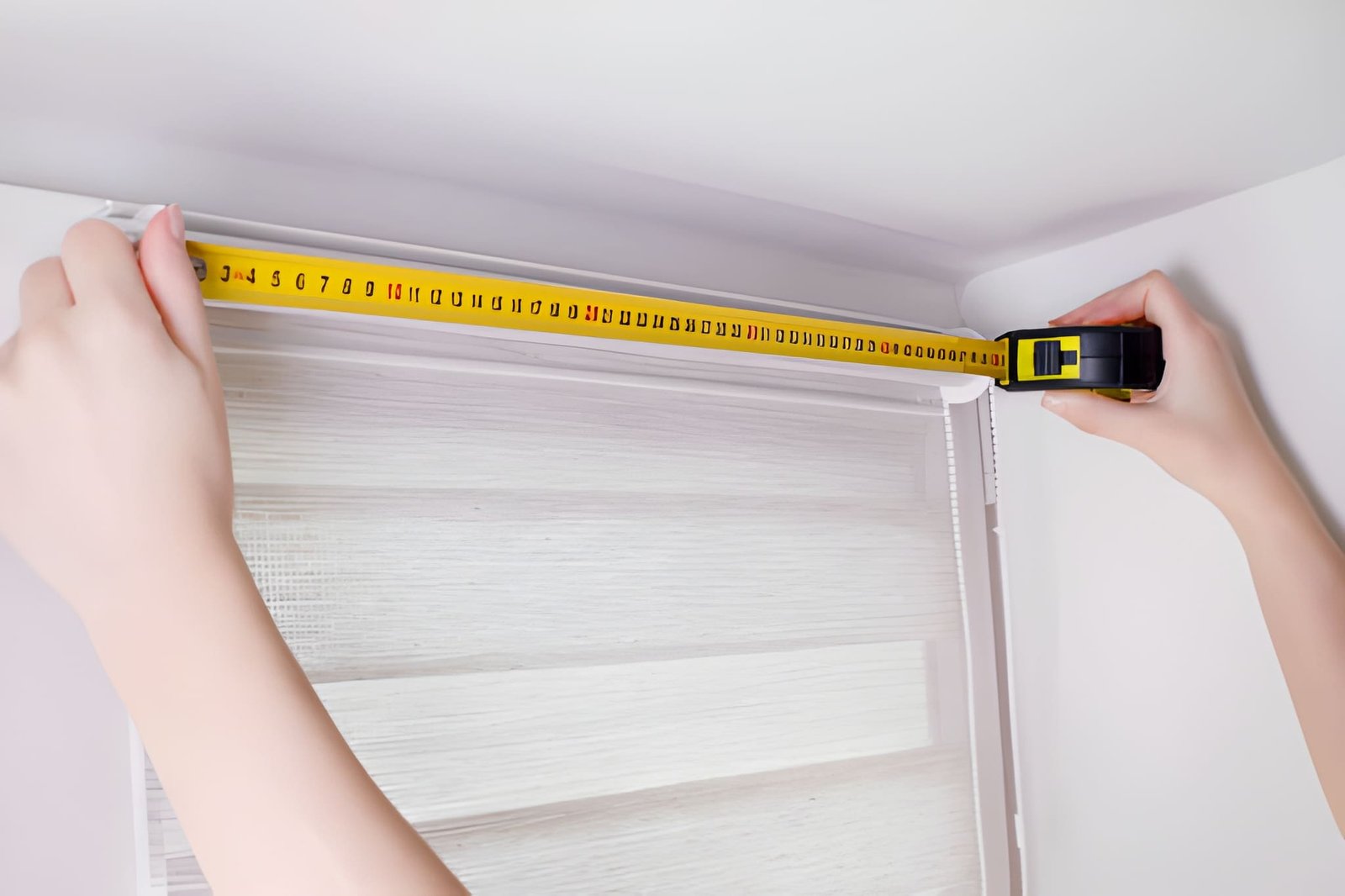
A good fit starts with the room, not the tape measure. The process with Dream Blinds UK follows five stages. First, a home consultation: you discuss how each room is used, what matters most — darkness, privacy, moisture resistance, glare — and which windows or doors are involved. Second, choice: you look at fabric samples in the room itself, compare opacities and colours in natural light, and settle the control side and finish, including whether a cassette or motorised operation would help. Third, measurement: each window and door is measured professionally, taking account of the recess, frame, handles, and opening direction. Fourth, production: the blind is made to those measurements in the fabric and finish chosen. Fifth, fitting: the brackets are fixed, the blind is hung and tested through its full travel, and the control is checked so the blind rolls evenly and stops where it should. Dream Blinds UK offers a home consultation and measurement service in Bradford, so the measuring and fitting stages are handled for you rather than left to guesswork.
Cleaning and maintenance
Roller blinds are among the easier window treatments to keep clean, because the fabric is flat and accessible. Regular dusting with a soft cloth, a feather duster, or a vacuum cleaner on a low setting with a brush attachment will keep most fabrics looking fresh. For marks, a lightly dampened cloth is usually enough on many fabrics, dabbing rather than scrubbing, and allowing the fabric to dry fully before rolling it away. Always follow the care guidance for the specific fabric you have chosen, because care varies: a PVC or vinyl blind in a kitchen or bathroom can generally be wiped down more firmly than a delicate printed fabric, while a blackout coating or a thermal backing may need gentler handling. Avoid soaking the fabric, using harsh chemicals or abrasive pads, or machine-washing a blind unless the supplier has specifically said that fabric is washable.
Who should choose roller blinds?
Roller blinds are a good choice if you want a neat, unobtrusive window covering that largely disappears when open; need blackout in a bedroom, or moisture resistance in a kitchen or bathroom, and want one blind type that can do both with different fabrics; have wide windows, patio doors, or a bay where a flat, easily operated covering suits the glass better than curtains alone; prefer simple operation — one control, no slats to tilt or folds to manage — and a blind that is quick to clean; want to introduce colour or pattern at the window without adding bulk, or to keep the window calm with a neutral fabric; or are happy with up, down, or part-way control, and do not need the fine, tilted light adjustment that slats provide. If, instead, you need graded light control throughout the day, a soft draped look, or a solution for a non-rectangular window, compare Roman, Venetian, or vertical blinds before deciding.
FAQs
Are roller blinds good for bedrooms?
Yes, particularly in a blackout fabric. A blackout roller blind blocks light through the fabric itself, which helps with sleep, shift work, and bright summer mornings. The main detail to get right is the fit, because a small amount of light can still enter at the sides of an inside-recess blind. A face fit with overlap, side channels, or curtains layered over the blind can reduce that edge light.
Do blackout roller blinds block out all light?
A blackout fabric blocks light passing through the material, but it does not by itself guarantee total darkness. Light can still come in around the edges, where the fabric is narrower than the bracket width, and at the top and bottom depending on the fit. For the darkest result, discuss a face fit, side channels, and a cassette at consultation, and consider curtains as a second layer.
Are roller blinds suitable for kitchens and bathrooms?
Yes, provided the fabric is chosen for the room. Moisture-resistant fabrics, including PVC and vinyl, cope with steam and splashes and can be wiped clean, which makes them practical near sinks and in bathrooms. A standard fabric blind may mark or deteriorate faster in a damp room, so tell the supplier where the blind will hang.
Can roller blinds cover patio doors and wide windows?
Yes. Roller blinds suit wide glass because the fabric hangs flat and rolls away neatly, and very wide openings can be covered with two or more blinds side by side, each operated independently. Check door-handle clearance and opening direction before choosing a fit, and consider motorised operation on wide doors.
What is the difference between sheer, dim-out, blackout, and thermal fabrics?
Sheer fabrics filter daylight and give daytime privacy while keeping the view, but offer little privacy at night. Dim-out fabrics darken a room noticeably and reduce glare without shutting light out entirely. Blackout fabrics block light through the fabric for sleep and full privacy. Thermal fabrics add a backing intended to reflect heat or add insulation, and are often combined with blackout.
Should roller blinds go inside or outside the recess?
Either can work, and the choice depends on the window and what matters most. An inside-recess fit sits neatly within the opening and looks built in, but leaves small side gaps for the mechanism. A face fit, mounted on the wall or frame in front of the recess with overlap beyond the opening, gives more coverage and less edge light. Shallow recesses and inward-opening windows often suit a face fit better.
How do I clean roller blinds?
Dust regularly with a soft cloth or a vacuum brush attachment, and deal with marks promptly by dabbing with a lightly dampened cloth, then letting the fabric dry before rolling it away. Care varies by fabric: PVC and vinyl blinds can usually be wiped more firmly, while printed or coated fabrics need gentler handling. Avoid soaking the fabric or using harsh chemicals unless the supplier's care guidance for that fabric says otherwise.
Are roller blinds safe around children and pets?
Roller blinds can be made safer by choosing the right control and fitting. Cordless options remove a looped control altogether, and where a chain or cord is used, it should be fitted so it is kept out of reach and tidy, away from cots, beds, and furniture that can be climbed. Mention children and pets at consultation so the control and fitting can be planned with them in mind.
Can I have cordless or motorised roller blinds?
Yes, both are available on many roller blinds. Cordless operation suits a clean look and removes a hanging loop, while motorised operation, controlled by remote, is useful for wide blinds, high windows, and patio doors where reaching a chain is awkward.
Is made-to-measure worth it over ready-made?
Made-to-measure is worth it where fit affects the result: non-standard windows, bays, wide openings, patio doors, and bedrooms where edge light matters. A blind made to your window's measurements sits more neatly, covers the glass more fully, and offers a wider choice of fabric and finish. For a single standard window in a low-use room, a ready-made blind can be adequate.
Do thermal roller blinds reduce heating bills?
A thermal blind can improve comfort at the window by adding a layer and, depending on the fabric and backing, reflecting solar gain or reducing heat movement at the glass. How much difference it makes depends on the fabric, fit, glazing, and room, so it should not be relied on as a way to cut bills on its own.
Will roller blinds work on a bay window?
Yes, with one blind per facet of the bay. Each section is fitted to its own pane, so the fabric stays flat and each blind can be operated independently. Because bay angles and depths vary, professional measurement of each facet is especially important for a tidy result.