Energy-saving blinds, often called thermal blinds, are window coverings chosen mainly to improve comfort at the window. They do this by slowing heat movement, reducing draughts around the glass, and, in summer, cutting glare and solar gain. The most important point is that “thermal” is not one product. It describes a set of constructions — most notably cellular, or honeycomb, fabric, thermal-backed roller fabric, and lined fabric treatments — and the result depends on the construction, the fabric, the colour, how closely the blind fits, and how it is used day to day. A thermal label on its own tells you very little. The structure behind the label tells you much more.
What are energy-saving / thermal blinds?
The clearest example is a cellular blind. Its fabric is formed into hexagonal pockets, like a honeycomb, when viewed from the side. Those pockets trap air. Still air is a poor conductor of heat, so the pockets act as a barrier between the room and the cold glass in winter, and between the room and hot glass in summer. Cellular blinds are available as single-cell and double-cell versions. Double-cell versions have two layers of pockets and a more structured feel, and are generally the choice where insulation is the main priority. Single-cell versions are lighter and slimmer, and suit smaller windows or rooms where the thermal need is less pressing.
Other thermal blinds work differently. A thermal roller blind uses a flat fabric with a backing designed to reflect heat or block light. It does not have air pockets, so its effect comes from the fabric and backing and from how fully it covers the glass. A lined Roman blind or a lined curtain uses thickness and layers to slow heat movement. Some pleated blinds are made from thermal fabrics, and some Perfect Fit cellular blinds combine a honeycomb fabric with a frame that sits close to the glass. The common thread is not a single fabric, but an attempt to add a layer at the window that is more effective than a thin, loosely fitted blind.
What problems do thermal blinds solve?
The first problem is the cold feeling near a window. Even with double glazing, glass loses heat faster than a wall, and air cooled by the glass can fall into the room and feel like a draught. A well-fitted thermal blind adds a layer that slows that movement and makes the area beside the window feel less cold. It does not stop heat loss through the glass, but it can make the room more comfortable to sit in.
The second problem is summer overheating. A south-facing room, a conservatory, or a room with large glazing can become uncomfortably bright and hot. A light-coloured thermal blind, closed during strong sun, reflects some solar energy and reduces glare, while still allowing some diffused light if a light-filtering fabric is chosen. This is different from winter performance: in summer, the aim is to keep heat out before it builds up in the room, so closing the blind early in strong sun matters more than closing it late in the day.
Thermal blinds also help with privacy and light control at the same time. A blackout cellular blind, for example, can darken a bedroom and give strong privacy, while a light-filtering version keeps a living room bright without a clear view in during the day. For rooms that are both cold and overlooked, that combination is often the reason a thermal blind is chosen over a standard blind.
Key Benefits
Comfort in both seasons, rather than a single number. In winter, a cellular blind can make a room feel less draughty near the window. In summer, it can reduce glare and the build-up of heat from direct sun. Because the benefit is about the window, it is most noticeable in rooms where you sit close to the glass.
Flexibility that a fixed insulation measure does not give. Thermal blinds can be raised for daylight and a view, lowered for privacy, and partly lowered for a balance of light and shade. Top-down/bottom-up versions add another option: the top can be lowered for daylight while the bottom stays closed for privacy.
A contained change. Replacing windows is a major project. A made-to-measure thermal blind is fitted to the existing window, can be chosen room by room, and can be combined with curtains for extra thickness at night. It will not solve a problem caused by a broken seal, a badly fitting frame, or a lack of wall insulation, but it can improve the window part of the problem without other building work.
Where thermal blinds work best
Living rooms
Living rooms with large windows or a cold wall of glass benefit most, because that is where the chill and the glare are felt. A light-filtering cellular blind keeps the room usable during the day, while a blackout version is useful if the room is also used for television in the evening.
Bedrooms
Bedrooms are a strong case for blackout thermal blinds. A blackout cellular blind, fitted closely, can darken the room for sleep and give strong privacy at night. The same blind, raised during the day, restores daylight. If early morning light is the main issue, check the fit at the sides and top, since light leaking around the edges can matter as much as light through the fabric.
Kitchens and bathrooms
Thermal blinds can work here, but fabric choice needs care. A kitchen blind should be easy to wipe and able to cope with steam and cooking marks. A bathroom blind needs a fabric that can cope with humidity and be cleaned without soaking. Cellular fabrics can trap moisture if they are not ventilated, so the room's ventilation and the fabric guidance should be checked. In both rooms, a thermal roller with a wipeable backing may be simpler to maintain than a deep cellular fabric.
Conservatories
Conservatories are difficult rooms for temperature control, with large areas of glass on walls and roof. Thermal blinds on side windows can help with glare and with the chill on winter evenings, but they do not solve roof heat gain on their own. Roof glazing needs a blind designed for that angle. A side-window thermal blind should be judged as part of a wider approach, including ventilation and shading, rather than as a complete answer for a conservatory.
Bay windows
Bay windows have several panes and a larger area of glass than a flat window, so they lose more heat and let in more sun. Thermal blinds fitted to each pane, or a cellular blind fitted closely within each section, can help. The number of blinds and the way they are operated should be considered, since a bay with several thermal blinds means several adjustments.
Large windows and patio doors
Large windows and glazed doors benefit from a thermal layer, but the format matters. A cellular blind can be heavy on a very wide drop, and a vertical blind, while practical for a sliding door, has gaps between vanes that limit its thermal effect. For a hinged French door, a Perfect Fit cellular blind can give a close fit. For a sliding door, the thermal choice may need to be balanced against ease of use.
Privacy and light control
Privacy and light control in thermal blinds depend on fabric opacity, not on the word “thermal”. A sheer or light-filtering cellular fabric lets daylight through and gives daytime privacy, but at night, with lights on inside, shapes can be seen from outside. A dimout fabric reduces that effect. A blackout fabric gives the strongest privacy and the darkest room, but it also blocks daylight when lowered.
Top-down/bottom-up operation changes the balance. Lowering the top of the blind lets daylight in from above while keeping the lower part closed for privacy at eye level. That is useful for street-facing rooms. Slatted thermal options, such as a lined wooden blind, give variable control by tilting, but the gaps between slats mean they do not seal as completely as a cellular fabric. For bedrooms, the practical test is not the fabric name but the combination of fabric and fit in your own room at night.
Thermal performance and energy efficiency
Heat moves through a window in three ways: conduction through the glass, convection as air moves past cold or hot glass, and radiation from sunlight. A thermal blind addresses all three to some extent, but none completely. Cellular fabric works mainly by trapping air. The pockets create still air layers that slow conduction and reduce convection. The effect is stronger when the blind fits closely, because air that can flow freely around the edges will bypass the pockets. Side channels or a frame that holds the blind close to the glass can help, but they do not make the window airtight. The glass itself, the frame, and any vents remain paths for heat.
Colour and backing matter for summer. A light-coloured or reflective outer face reflects more solar energy than a dark fabric, which absorbs heat and can radiate it into the room. A dark blackout fabric may be excellent for winter darkness but less effective for summer heat if it absorbs sun. For a south-facing room, that distinction should be discussed, not assumed.
It is important to be clear about limits. A thermal blind will not make a single-glazed window perform like a modern insulated wall, and it will not fix a draughty frame. Industry testing, including work often cited from the British Blind Shutters Association and university research, has reported measurable reductions in heat loss through windows when blinds are properly fitted, with cellular blinds generally performing best among blind types. The size of the effect in a particular home still depends on the window, the fabric, the fit, and how the blind is used. That is why this page does not promise a set reduction in bills. The safer expectation is improved comfort at the window, and a contribution to keeping warmth in or heat out, rather than a guaranteed saving. How the blind is used also matters. In winter, closing thermal blinds at dusk, after daylight has warmed the room, helps retain warmth overnight. In summer, closing them during strong sun, before the room heats up, is more effective than closing them after the room is already hot.
Materials, fabrics, colours and finishes
Cellular (honeycomb) fabric: Usually polyester, formed into single or double cells. Available in sheer, light-filtering, dimout and blackout versions. Double-cell is the usual choice where insulation is the priority; single-cell is lighter and suits smaller windows.
Thermal roller fabric: A flat fabric with a thermal or reflective backing. It gives a clean look and can be blackout, but it does not have the air pockets of a cellular blind. It is often simpler to clean than a cellular fabric.
Lined Roman fabric: A decorative fabric with a lining, sometimes a thermal lining, that adds thickness. It gives a softer look than a cellular blind and can be layered with curtains, but its thermal effect depends on the lining and on how closely it sits to the window.
Pleated thermal fabric: A folded fabric, sometimes with a thermal coating, that diffuses light. It is lighter than a cellular blind and can work in a Perfect Fit frame, but it does not trap air in the same way.
Colours should be chosen with both seasons in mind. Light colours generally reflect more summer sun, while darker colours can absorb heat. The colour visible from inside the room and the colour facing the glass are not always the same, since some fabrics have a neutral backing. Samples in your own daylight, and a discussion of which side faces the glass, will help avoid a colour that looks right in one season and works against you in the other.
Made-to-measure vs ready-made
Fit is central to thermal performance, so made-to-measure has a clear practical advantage here. A ready-made blind that is too narrow leaves a gap at the sides, and a gap allows air to move around the blind and reduces both insulation and blackout. A blind that is too wide may not operate smoothly or may bunch at the edges. Made-to-measure also allows the right format for the window: a cellular blind with side channels where they help, a Perfect Fit cellular blind for a door, or a thermal roller where a flat drop is wanted. It allows control placement to be chosen for the room, and it allows the fabric to be checked against the actual window size, including bay sections and shaped panes. Ready-made blinds are not without merit. They can be a practical, lower-cost option for a standard window where the size is close and thermal performance is a secondary concern. For a window where warmth or summer heat is the main reason for buying, however, the fit should not be left to chance.
Things to consider before choosing thermal blinds
Start with the window, not the fabric. Is the main problem winter cold, summer heat, glare, privacy, or a combination? A room that is cold in winter and hot in summer needs a fabric and colour that work in both seasons, or a blind that can be adjusted through the day. Check the fit. Will the blind sit inside the recess or outside it? Inside the recess generally gives a closer fit and less air movement, but it needs enough recess depth. Outside the recess can cover more of the frame but may leave more air movement at the edges. Side channels, a frame, or a close-fitting headrail can help, but they add depth and need clearance from handles and vents.
Consider the room's use. A bedroom needs blackout and privacy. A living room needs daylight and glare control. A conservatory needs a plan for roof glass as well as side glass. A kitchen or bathroom needs a fabric that can be cleaned and can cope with humidity. A very large window needs a format that can be operated without strain, and a motorised option may be worth discussing for high or hard-to-reach windows. Also consider weight and operation. Double-cell blinds are more structured than single-cell blinds, and a very wide thermal blind can be heavier to raise. Top-down/bottom-up operation adds flexibility but also adds cords or mechanisms that should be checked for ease of use and for keeping cords out of reach of young children and pets.
Potential disadvantages / when another blind may be better
Thermal blinds have genuine limits. Cellular fabrics can be more difficult to clean than a flat roller or a slatted blind, because dust can sit inside the cells and the fabric should not be soaked unless the care guidance allows it. Some cellular fabrics can also be damaged by sharp objects or by pets. A thermal blind is also not the best choice for every window. Slatted blinds, such as Venetian or vertical blinds, give more variable light control by tilting or rotating vanes, and may be better where precise daylight control matters more than insulation. Curtains, especially heavy lined curtains that extend beyond the window and sit close to the wall, can add a thick layer at night and give a softer look, although they need to be drawn to work and they block the view when closed. Plantation shutters give a solid, framed layer and can be a strong choice for a front room, but they involve a higher initial investment and are fixed to the window, so they are less suited where frequent unobstructed access through the opening is needed. If the window itself is the main problem — for example, a broken seal, a badly fitting frame, or single glazing in a very exposed position — a thermal blind will improve comfort but will not fix the underlying issue.
Thermal blinds vs similar alternatives
| Feature | Cellular / thermal blind | Standard roller blind | Lined curtains | Plantation shutters |
|---|---|---|---|---|
| How it helps warmth | Air pockets in cellular fabric slow heat movement; close fit helps | Flat fabric with backing gives some barrier, but no air pockets | Thickness and lining add a layer, especially when drawn and fitted closely | Solid panel and frame add a layer at the window |
| Summer heat | Light colours and close fit help reduce glare and solar gain | Reflective backing can help, but flat fabric alone is less insulating | Heavy curtains block sun when drawn, but block the view as well | Louvres can angle sun away while keeping some light |
| Light control | Fabric opacity and top-down/bottom-up options | Single fabric drop, raised or lowered | Open or drawn, with limited middle positions | Louvre tilt gives variable control |
| Best for | Cold or hot rooms where insulation is the priority | Plain windows where a simple, clean drop is wanted | Bedrooms and living rooms where a soft, layered look matters | Front rooms and street-facing windows where a fixed, framed look is wanted |
| Watch out for | Cleaning inside cells; fit matters greatly | Side gaps reduce thermal effect | Needs to be drawn to insulate; needs wall clearance | Higher initial investment; fixed to the window |
Measuring and professional fitting
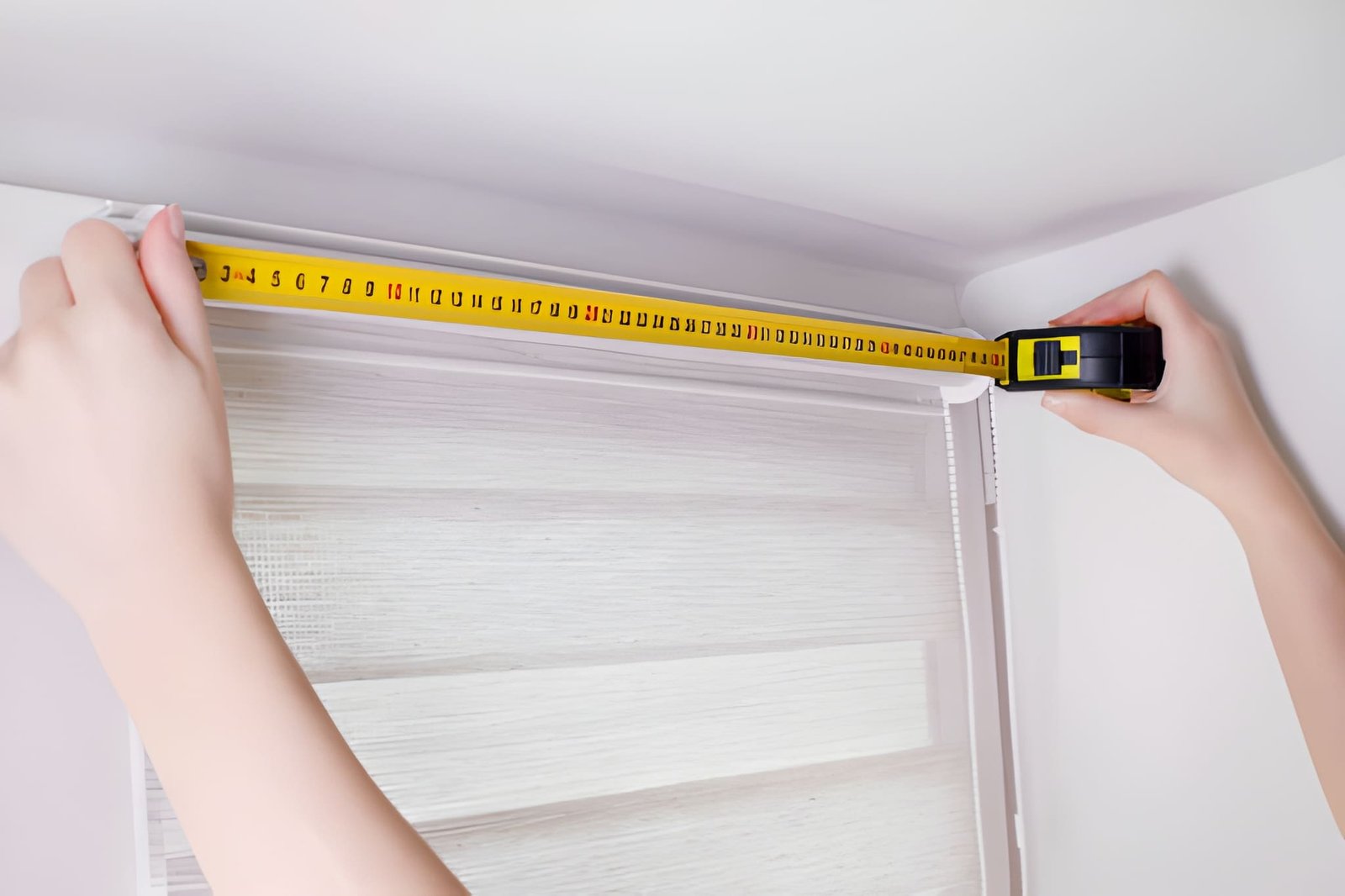
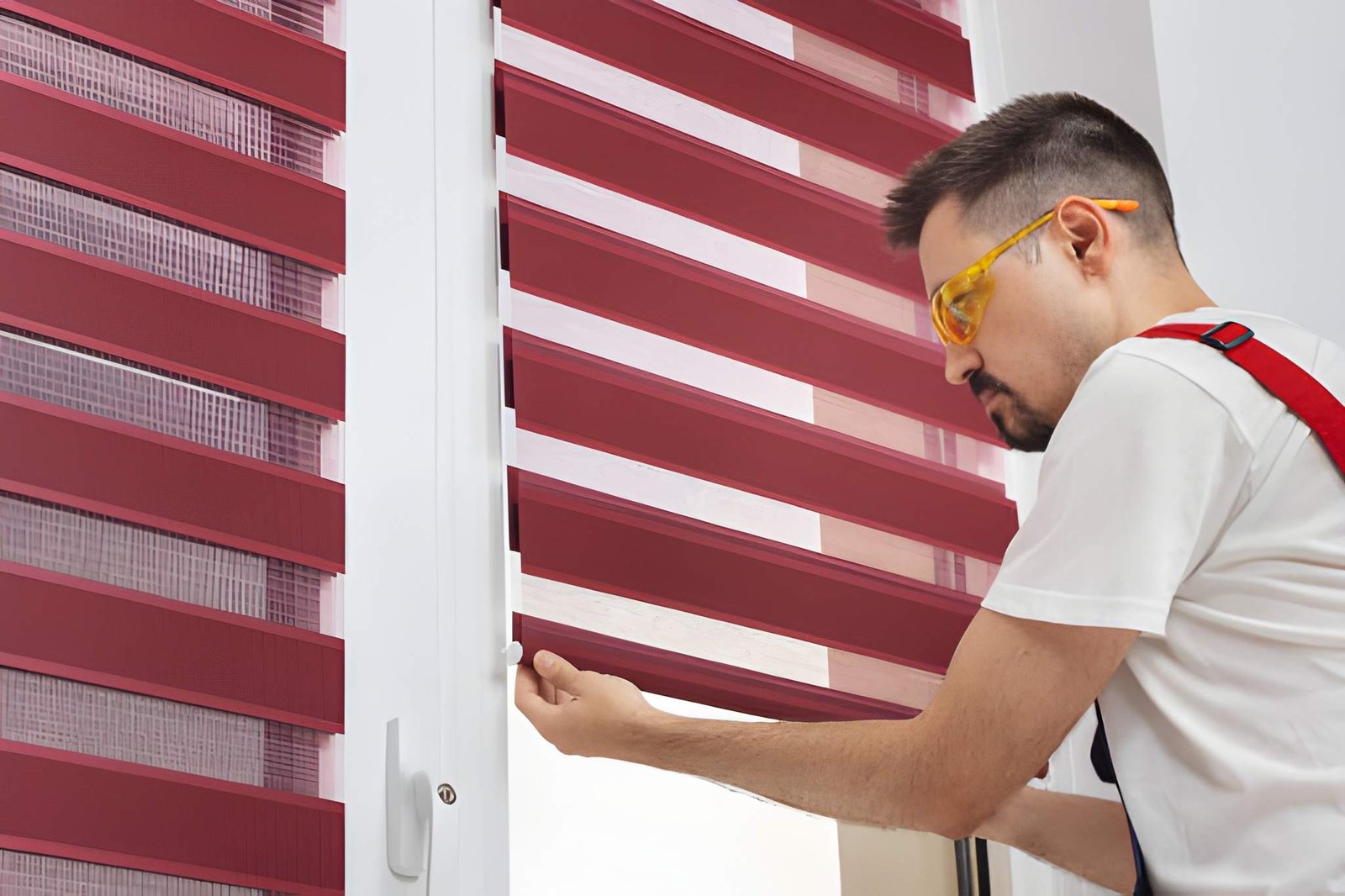
A consultation for thermal blinds should start with the room and the window, not with a fabric swatch. The adviser looks at the window size and shape, the recess depth, handle and vent positions, and whether the window is used for ventilation. Samples are then held against the glass in your own daylight, because a fabric that looks light in a showroom can look darker in a north-facing room. Measurement focuses on coverage. For a thermal blind, the aim is to cover the glass as fully as practical, with as little edge gap as possible, while still allowing the blind to operate smoothly and the window to open. The blind is then made to those measurements. On fitting, the installer checks that the blind sits evenly, that side channels or frames, where fitted, do not catch, and that the blind can be raised, lowered and, where fitted, operated top-down without strain. For homes in Bradford and West Yorkshire, an in-home visit helps because window sizes, recess depths and glazing types vary widely, even within the same street.
Cleaning and maintenance
Cellular blinds should be dusted regularly with a soft cloth or vacuumed on a low setting with a brush attachment. That prevents dust building up inside the cells. Spot cleaning, where needed, should follow the fabric guidance: a lightly damp cloth and a mild cleaner are often suitable, but soaking should be avoided unless the specific fabric allows it. Harsh chemicals can damage the fabric or its backing. Thermal roller blinds are generally simpler: dust with a soft cloth and wipe the backing or face fabric as directed. Lined Roman blinds should be vacuumed gently and spot-cleaned according to their fabric, since the lining can be affected by water. In all cases, keep the headrail and mechanism free of dust, and check cords, handles and any motorised controls from time to time.
Who should choose energy-saving / thermal blinds?
Thermal blinds may suit you if you feel a chill or draught near windows in winter, or glare and heat build-up in summer; want a blind that helps with comfort as well as privacy and light control; have a bedroom, living room or conservatory side window where a close fit is possible; want the flexibility to raise, lower or partly lower the blind through the day; want a room-by-room improvement without replacing windows; or are happy to follow fabric-specific cleaning guidance, especially for cellular fabrics. They may not suit you if you need precise slat-by-slat light control, a very wide sliding door where ease of use matters more than insulation, a room where the blind will be exposed to heavy steam or direct water, or a window where the underlying frame or glazing needs repair first.
See samples in your own home — book a home consultation to check your windows, recess depth and daylight before choosing a thermal fabric.
FAQs
Do thermal blinds really work?
They can improve comfort at the window, but they do not work like wall insulation. Cellular fabric traps air and slows heat movement, and a close fit reduces air movement around the edges. The effect depends on the window, the fabric, the fit and how the blind is used. They are best judged as a comfort improvement, not as a guaranteed saving on bills.
Are honeycomb blinds the most energy-efficient blinds?
Honeycomb, or cellular, blinds are widely described as the most insulating blind type, because their air pockets create a barrier that flat fabrics do not have. Double-cell versions generally offer more insulation than single-cell versions. The benefit still depends on fit: a loosely fitted cellular blind with large side gaps will not perform as well as a closely fitted one.
Do thermal blinds keep heat out in summer?
They can help, especially if they are light-coloured or have a reflective backing and are closed during strong sun. They cannot stop all heat, because heat still passes through the glass and the blind sits inside the room. Closing the blind before the room heats up is more effective than closing it after it is already hot.
Can thermal blinds be blackout?
Yes, in the sense that blackout cellular and thermal roller fabrics are available. A blackout fabric blocks light through the fabric, but total darkness also depends on fit. Light can still leak at the sides, top or around a headrail. For a bedroom where darkness matters, check fabric and fit together.
Are thermal blinds good for bedrooms?
They can work well, particularly in blackout cellular fabric, because they combine darkness, privacy and a warmer feeling near the window. Top-down/bottom-up versions also allow daylight from above while keeping privacy below. If you are a light sleeper, check side light in your own room before deciding.
Are thermal blinds suitable for conservatories?
They can help on side windows for glare and for evening chill, but they do not solve roof heat gain on their own. Roof glazing needs a blind designed for that angle. A conservatory plan should include ventilation and shading as well as side-window blinds.
What is the difference between single-cell and double-cell honeycomb blinds?
Single-cell blinds have one layer of honeycomb pockets and are lighter and slimmer. Double-cell blinds have two layers, are more structured, and generally offer more insulation. Double-cell blinds can be heavier and bulkier, so they suit windows where insulation is the priority and the recess can take the depth.
Can thermal blinds be fitted to large windows?
Yes, but format and weight matter. A very wide cellular blind can be heavy to raise, and a vertical blind on a sliding door will have gaps between vanes that limit insulation. For large windows, discuss whether a cellular blind, a thermal roller, or a combination with curtains gives the best balance of coverage and ease of use.
How do you clean honeycomb blinds?
Dust regularly with a soft cloth or vacuum on a low setting with a brush attachment. Spot clean only as the fabric guidance allows, using a lightly damp cloth and mild cleaner where suitable. Avoid soaking cellular blinds and avoid harsh chemicals, since water and strong cleaners can damage the fabric or its structure.
Are thermal blinds suitable for bathrooms and kitchens?
They can be, with the right fabric. Choose a fabric that can cope with humidity and be wiped or spot-cleaned easily, and make sure the room is ventilated. A thermal roller with a wipeable backing may be simpler than a deep cellular fabric in a steamy room. Avoid placing a fabric blind where it will be in direct contact with water.
Do thermal blinds help with noise?
They can slightly soften sound at the window, because fabric and air pockets absorb some sound, but they are not a soundproofing measure. If road noise is the main problem, the window and frame, and any gaps around them, matter more than the blind fabric.
Should I choose thermal blinds or curtains for warmth?
It depends on the window and how you use the room. A closely fitted cellular blind gives insulation without blocking the view when raised. Heavy lined curtains give a thick layer when drawn, but they must be drawn to work and they block the view. Many homes use both: a thermal blind for daytime control and curtains for extra thickness at night.