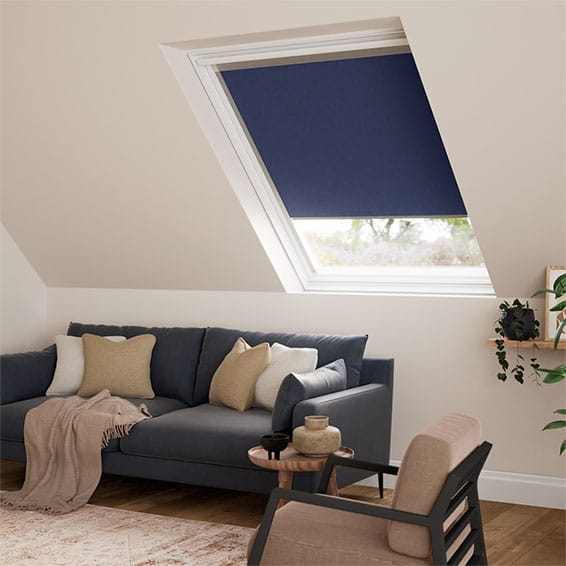
Roof window blinds are blinds made to fit a pitched roof window or a skylight, rather than a standard vertical window. The window is set into a sloping roof, so a normal blind would hang away from the glass, swing when the window opens, and leave gaps at the sides. A roof window blind is held in side channels or a frame that keeps it close to the glass, follows the pitch, and can be positioned at any point down the window. That distinction matters more than fabric colour: if the blind does not fit the window and its pitch, it will not control light or heat well, however good the fabric looks.
The name Velux is often used as a shorthand for any roof window, but VELUX is a specific manufacturer. Many roof window blinds are made to be compatible with VELUX windows, and compatibility depends on the specific window model and size. A blind that fits one VELUX window will not necessarily fit another, and a blind made for a VELUX window will not necessarily fit a different manufacturer's roof window.
What are Velux / roof window blinds?
A roof window blind sits inside the window frame, in channels or guides that run down each side of the window. Those guides keep the blind flat against the glass when the window is pitched, and they allow the blind to be stopped part-way down, rather than falling to the bottom or hanging loose.
The main types are roller blinds, pleated blinds and Venetian blinds, adapted for a roof window. A roller blind gives a flat sheet of fabric, in translucent, dim-out or blackout versions. A pleated blind gives a folded fabric that can be more decorative and can be used as a duo blind, with a translucent section and a blackout section that can be moved independently. A Venetian blind for a roof window uses horizontal slats, often in aluminium, and is useful where moisture resistance matters, such as a bathroom roof window.
Operation depends on reach. A manual blind is operated by a control bar that can be pulled down and up, and is suitable for a window within reach. A control rod can extend reach for a higher window. Solar-powered and electric blinds are operated by remote control and are the practical option for a window that cannot be reached safely, or for several roof windows that need to be operated together. The specific operation available depends on the window and the blind system, so it should be confirmed for that window, not assumed. Flat roof windows are a separate case: a blind made for a pitched VELUX window will not automatically fit a flat roof window, and vice versa.
What problems do roof window blinds solve?
The most immediate problem is light. A roof window lets in more light than a vertical window of the same size, because it faces the sky. In a loft bedroom, that can mean early morning light that wakes a sleeper, even with curtains elsewhere in the room. A blackout roof blind, held in side channels, can darken the room far more effectively than a loose fabric hung over the window.
A second problem is heat. In summer, a roof window can let in strong sun and make a loft room uncomfortably warm. An interior blind can reduce glare and some heat, but it sits inside the glass, so heat has already entered through the window by the time it reaches the blind. For heat control, an external blind or shutter, where available for that window, is generally more effective, because it stops sun before it reaches the glass.
A third problem is reach. A roof window in a double-height space, a stairwell or a high loft wall may be out of reach. A manual blind on such a window is difficult to use daily, and a control rod or a solar or electric blind changes whether the blind is actually used at all. A fourth problem is privacy. A roof window is less overlooked than a ground-floor window, but neighbouring properties, especially in terraced housing or on a hillside, can still see into a loft room through a skylight.
Key Benefits
A fit that follows the pitch. Side channels keep the blind against the glass, so it does not swing, gap or fall when the window is opened for ventilation. That close fit also reduces light leakage around the edges compared with a standard blind hung over a pitched window.
Blackout that actually works in a bedroom. A blackout roof blind with side channels can darken a loft bedroom to a level that a standard blind cannot, because the fabric is held close to the glass and the edges are guided.
Flexible positioning. A roof blind can be stopped at any point down the window, so you can shade the lower part for privacy while leaving the upper part open for daylight, or close it fully for sleep. Duo pleated blinds take this further, with a translucent section for daytime and a blackout section for night, in a single blind.
Operation for high windows. Solar and electric operation means a high window does not need a ladder or a long pole every time the blind is adjusted.
A neat, integrated look. A roof window blind sits inside the window frame, so it does not dominate a loft room or interfere with furniture placed below the window.
Where roof window blinds work best
Loft bedrooms
This is the strongest use case. A blackout roof blind gives darkness for sleep, and a duo pleated blind gives a daytime option for privacy without full darkness. The window's height matters: a bedroom window within reach can use a manual blind, while a high window in a vaulted ceiling will be easier with solar or electric operation.
Living rooms and loft conversions
A loft living room or a converted attic with several roof windows benefits from blinds that can be adjusted through the day as the sun moves across the roof. Translucent or dim-out fabrics keep the room bright while cutting glare, and a single remote for several blinds is useful when the windows are spread across a large roof.
Home offices
A loft office with a roof window directly above a desk can suffer from glare on a screen. A pleated or roller blind that can be positioned to shade the screen area, while leaving the rest of the window open, is more useful than a blind that is either fully open or fully closed.
Kitchens
A kitchen roof window or skylight can bring useful daylight, but it can also create glare on worktops. A translucent or Venetian roof blind gives control without darkening the kitchen. Moisture resistance matters here, so the material should be chosen with steam and cooking in mind.
Bathrooms
A bathroom roof window needs privacy and moisture resistance. A Venetian roof blind, often in aluminium, is a common choice here, as it handles steam better than fabric. A translucent roller or pleated blind can also work, provided it is not left damp and the room is ventilated.
Flat roof windows
A flat roof window in an extension, kitchen or bathroom needs a blind made for that construction. The blind may be fitted inside the rooflight unit, and its operation and size will depend on whether the unit is a dome, a flat glass rooflight or a specific manufacturer's product. This should be checked from the rooflight's details, not assumed from a pitched window blind.
Roof window blinds are not relevant to standard vertical windows, patio doors or bay windows. Those openings need a different blind, and using a roof blind on a vertical window would be a poor fit.
Privacy and light control
For daytime privacy, a translucent blind softens light and makes it difficult to see into the room, while still letting daylight in. For night-time privacy, a blackout blind is needed. A translucent blind that works well in daytime will not give the same privacy after dark when lights are on inside. The side channels on a roof blind help here, as they reduce light leakage around the edges, but the fabric itself must be blackout, not just dim-out, if full privacy is wanted.
For glare, a pleated or roller blind that can be stopped part-way is more useful than a blind that only opens or closes fully. Blackout performance depends on the fabric and the fit. A blackout fabric in a well-fitted roof blind with side channels will darken a room substantially, but small gaps at the top, bottom or sides can still let in light.
Thermal performance and heat control
An interior roof blind can help with comfort, but its limits should be understood. In winter, a closed blind adds a layer between the room and the glass, which can reduce the feeling of cold near the window and reduce heat loss through the glass to a modest extent. In summer, an interior blind reduces glare and some solar gain, but sun has already passed through the glass before it reaches the blind, so heat builds up between the glass and the blind. An external blind or shutter, where available for that window, stops sun before it reaches the glass and is generally more effective for heat control. Some blackout energy pleated blinds are designed with an additional insulating layer, and they can offer more insulation than a plain roller blind. No specific reduction in heating bills should be promised from a roof blind alone.
Types, materials and operation
Roller roof blinds give a clean, flat look and are available in translucent, dim-out and blackout fabrics, as well as duo versions that combine a dimming fabric with a blackout fabric.
Pleated roof blinds give a folded fabric that looks softer than a roller blind and can be used as a duo blind. Blackout energy pleated blinds combine blackout with an additional insulating layer.
Venetian roof blinds use horizontal slats, often aluminium, and give tilt control for light and privacy. They are useful in bathrooms and kitchens where moisture resistance matters.
Operation should be chosen by reach and by how many windows need to be operated. Manual operation with a control bar suits a window within reach. A control rod extends reach for a higher window. Solar-powered blinds use a rechargeable battery charged by a solar cell on the window, and are operated by remote. Electric blinds are wired or powered for a window that is part of an electrically operated system, and are also operated by remote. The exact options depend on the window model, so they should be confirmed for that window.
Colour and finish for roof blinds are usually neutral — whites, creams, greys and muted tones — with some brighter options in roller and pleated ranges. A light fabric keeps a loft room feeling bright when the blind is closed for privacy, while a dark fabric can make a small loft feel smaller. Samples should be seen against the roof window's light, which is stronger and more direct than light from a vertical window.
Made-to-measure vs ready-made
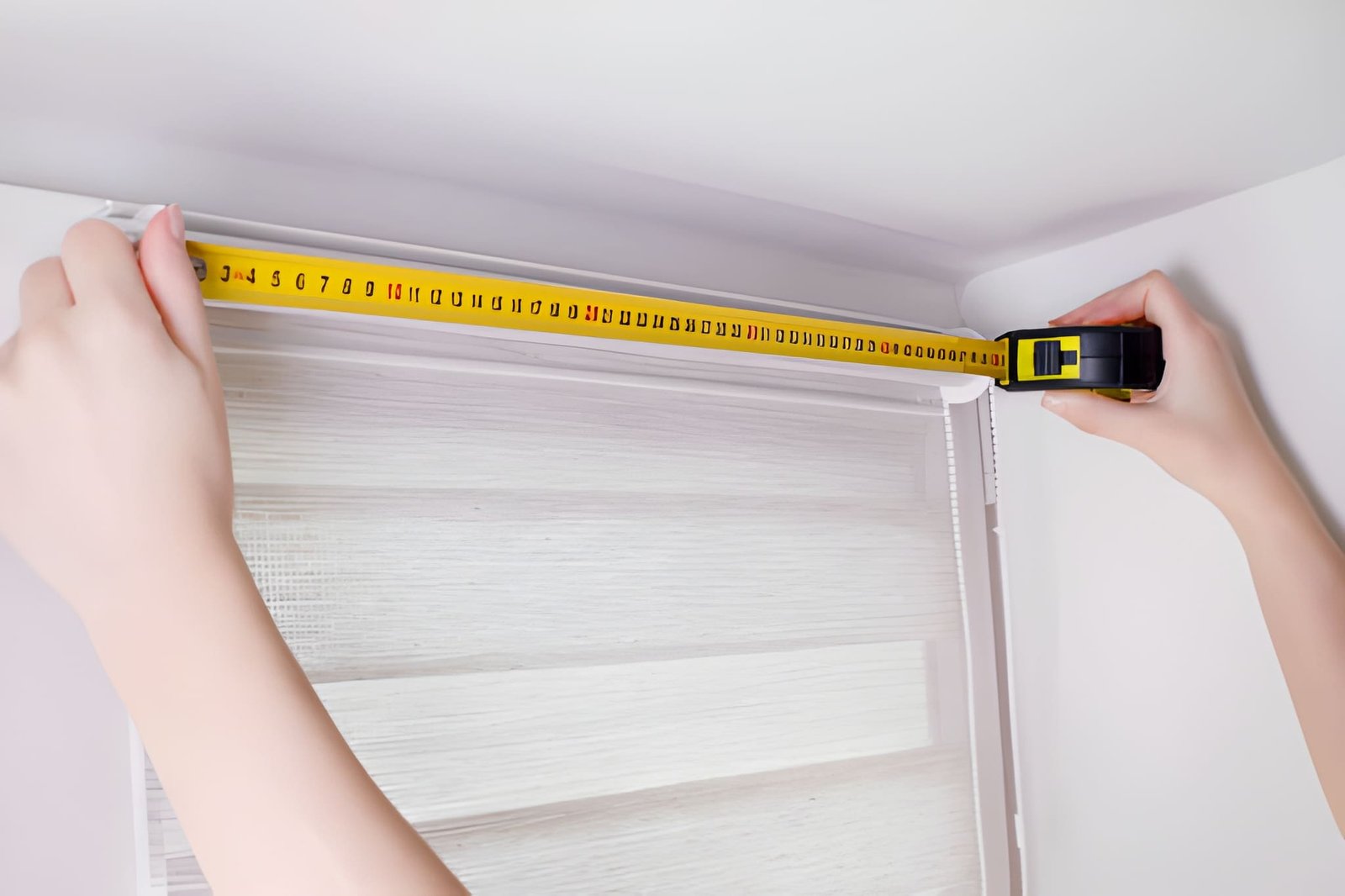
For roof windows, the distinction is less about standard sizes and more about compatibility. A VELUX-compatible blind is made to a specific window size code, which is found on a plate on the window itself, usually at the top of the open window. That code identifies the window's size and type, and it is the key to ordering the right blind. Ordering by measuring the glass alone can lead to a blind that does not fit the frame or the side channels.
A made-to-measure or manufacturer-compatible blind, ordered against that code, is made to fit the window's frame and guides. A generic blind, cut to an approximate size, may not sit in the guides correctly, may leave gaps, or may not operate smoothly on a pitched window. For a non-VELUX roof window, the same principle applies: the window's manufacturer, model and size need to be identified before a blind is ordered.
Things to consider before choosing roof window blinds
Window code and manufacturer. Find the code on the window before ordering. If the code cannot be found, or the window is very old, a consultation is the safer route than guessing.
Pitched or flat roof. A pitched window and a flat rooflight need different blinds. Confirm which type you have.
Height and reach. Can the window be reached safely from the floor? If not, solar or electric operation, or a control rod, should be considered from the start.
Whether the window opens. A blind that sits in side channels should still allow the window to open for ventilation. Check that the blind does not block the handle or the opening mechanism.
Blackout vs dim-out. Be clear whether the room needs darkness for sleep, or just reduced light and privacy. The fabric choice follows from that, not the other way round.
Heat vs light. If the main problem is summer heat, discuss external shading as well as an interior blind, rather than expecting an interior blind alone to solve overheating.
Bathroom and kitchen moisture. Choose a material that handles steam, and ensure the room is ventilated so the blind does not stay damp.
Children and pets. Cords and chains should be kept out of reach, and cordless or remote-operated options are worth discussing for a family home.
Multiple windows. If several roof windows need blinds, operating them together by remote can be more practical than operating each one manually, especially if they are high.
Potential disadvantages / when another blind may be better
Roof window blinds are specific to roof windows, and that specificity is also their limitation. They cannot be transferred to a vertical window, and a blind made for one window size will not fit another size. If the window is replaced, the blind may need to be replaced too. They can also be more limited in fabric choice than a standard blind, because the fabric must work in side channels and on a pitch. For heat control, an interior roof blind alone may not be enough for a loft that overheats in summer. External shading, ventilation and the roof's insulation matter more. For a room where the roof window is rarely used for light control — for example, a stairwell where the window is mainly for daylight — a blind may not be needed at all.
Roof window blinds vs similar alternatives
| Feature | Roof window blind | Standard roller blind | Curtains |
|---|---|---|---|
| Fits a pitched window | Yes, held in side channels | No, hangs away from glass and swings | No, hangs vertically and gaps at the pitch |
| Blackout in a loft bedroom | Strong, with side channels | Good on a vertical window, poor on a pitch | Good if lined and close-fitting, but not on a pitch |
| Operation at height | Manual, rod, solar or electric | Manual only, hard at height | Manual, hard at height |
| Heat control | Modest interior effect; external shade better for heat | Modest on a vertical window | Modest, depends on lining and fit |
| Best for | Loft bedrooms, loft offices, skylights | Vertical windows | Vertical windows, softer look |
The comparison is not about which blind is better in general, but about which blind fits the window. A roof window needs a roof blind, and a vertical window needs a vertical blind. Using the wrong type for the window is the most common mistake.
Measuring and professional fitting
For a VELUX window, the key measurement is the window code, not just the glass size. The code is usually found on a plate at the top of the open window, and it identifies the size and type. A consultation will check that code, confirm whether the window is pitched or flat, check its height and whether it opens, and discuss operation. For a non-VELUX roof window, the manufacturer and model need to be identified in the same way, and the blind's compatibility should be confirmed before ordering. The blind is then made or supplied to fit that window, and fitting includes fixing the side channels or frame, checking that the blind moves smoothly on the pitch, and checking that the window can still be opened and closed.
Dream Blinds UK offers a home consultation and measuring service, which is particularly useful for roof windows, where the code, the pitch and the height all need to be checked in person. In Bradford and the surrounding West Yorkshire area, this also allows the blind's operation to be tested against the actual window, rather than ordered from a photograph. No DIY measurement tolerances are given here, because they vary by window and blind system.
Cleaning and maintenance
Roof blinds are often higher than other blinds, so cleaning needs to be planned. For a window within reach, dust a roller or pleated blind gently with a soft brush or a vacuum with a brush attachment, and wipe a Venetian roof blind's slats with a dry microfibre cloth. For a high window, a blind that is rarely touched will collect dust, and cleaning it may need a stable step or a professional clean, rather than stretching from a ladder. Fabric roof blinds should be spot-cleaned rather than soaked, unless the manufacturer's care instructions for that specific fabric say otherwise. Do not force a blind that sticks in its channels, as that can damage the guides. Solar and electric blinds need their power source checked according to the manufacturer's instructions.
Who should choose roof window blinds?
Roof window blinds may suit you if you have a pitched roof window or skylight that needs light control, privacy or blackout; have a loft bedroom that is too bright in the morning; have a high roof window that needs remote, solar or electric operation; want a blind that stays close to the glass on a pitch and can be stopped part-way; or have a bathroom or kitchen roof window that needs a moisture-resistant option. They may be less suitable if your main problem is summer heat alone, if the window is not a standard roof window, or if the window code cannot be identified and compatibility cannot be confirmed.
See samples in your own home — book a home consultation to check your window code and compare roof blind fabrics in the room's own light.
FAQs
Do VELUX blinds fit all roof windows?
No. VELUX-compatible blinds are made for specific VELUX window models and sizes, identified by a code on the window. A blind that fits one VELUX window will not necessarily fit another, and it will not necessarily fit a different manufacturer's roof window. Compatibility depends on the specific window model and size, so the code should be checked before ordering.
How do I find my VELUX window size?
The size code is usually on a plate at the top of the open VELUX window. It identifies the window's size and type, and it is the key to ordering the right blind. If the plate cannot be found, or the window is very old, a consultation is safer than measuring the glass alone, as the frame and guides also matter.
Can roof window blinds be blackout?
Yes, blackout roller and blackout pleated blinds are available for roof windows, and they work well in loft bedrooms because side channels hold the fabric close to the glass and reduce light leakage. Small gaps at the top, bottom or sides can still let in light, so blackout should be understood as substantial darkness, not necessarily perfect darkness in every room.
Are roof window blinds suitable for bathrooms?
Yes, with the right material. A Venetian roof blind, often in aluminium, handles steam well, and a translucent roller or pleated blind can also work if the room is ventilated and the blind is not left damp. The material should be chosen with moisture in mind, not just colour.
How do you operate a high roof window blind?
A manual blind with a control bar suits a window within reach. A control rod extends reach for a higher window. Solar-powered and electric blinds are operated by remote control and are the practical option for a window that cannot be reached safely, or for several windows that need to be operated together. The options available depend on the window model.
Can I fit a blind to a non-VELUX roof window?
It depends on the window's manufacturer, model and size. Some roof window blinds are made for specific non-VELUX windows, and some are made to measure for a range of roof windows. A blind described as VELUX-compatible should not be assumed to fit a different manufacturer's window without checking compatibility first.
What is the difference between a roller and a pleated roof blind?
A roller roof blind gives a flat sheet of fabric, in translucent, dim-out or blackout versions, and looks clean and minimal. A pleated roof blind gives a folded fabric that can be more decorative, and can be used as a duo blind with a translucent section and a blackout section. Both sit in side channels on a pitched window, so the choice is mainly about look and flexibility.
Do roof window blinds help with heat?
An interior roof blind reduces glare and some solar gain, but sun has already passed through the glass before it reaches the blind. For heat control, an external blind or shutter, where available for that window, is generally more effective because it stops sun before it reaches the glass. An interior blind is still useful for light and privacy, but it should not be presented as the main solution to overheating.
Can roof window blinds be fitted to flat roof windows?
Flat roof windows need a blind made for that construction, which may be a dome or a flat glass rooflight. A blind made for a pitched VELUX window will not automatically fit a flat roof window. The rooflight's manufacturer and model should be checked, and the blind's compatibility confirmed before ordering.
How do you clean roof window blinds?
For a window within reach, dust gently with a soft brush or a vacuum brush attachment, and spot-clean fabric with a damp cloth and mild detergent if the manufacturer's instructions allow it. For a high window, cleaning may need a stable step or professional help, rather than stretching. Do not force a blind that sticks in its channels, and keep solar and electric components dry.