Plantation shutters are solid, framed panels fitted to a window, with wide horizontal louvres that can be tilted to control light and privacy. They are not blinds. A blind hangs from a headrail and is raised or lowered. A shutter is a fixed frame with panels that swing open, like a door, and louvres that tilt within the panel. That difference shapes everything about how shutters look, how they are used, and where they suit a home. They give a structured, architectural finish to a window, and they allow a level of light control that is difficult to achieve with a single fabric drop, but they also involve a higher initial investment, a longer fitting process, and a permanent change to the window.
What are plantation shutters?
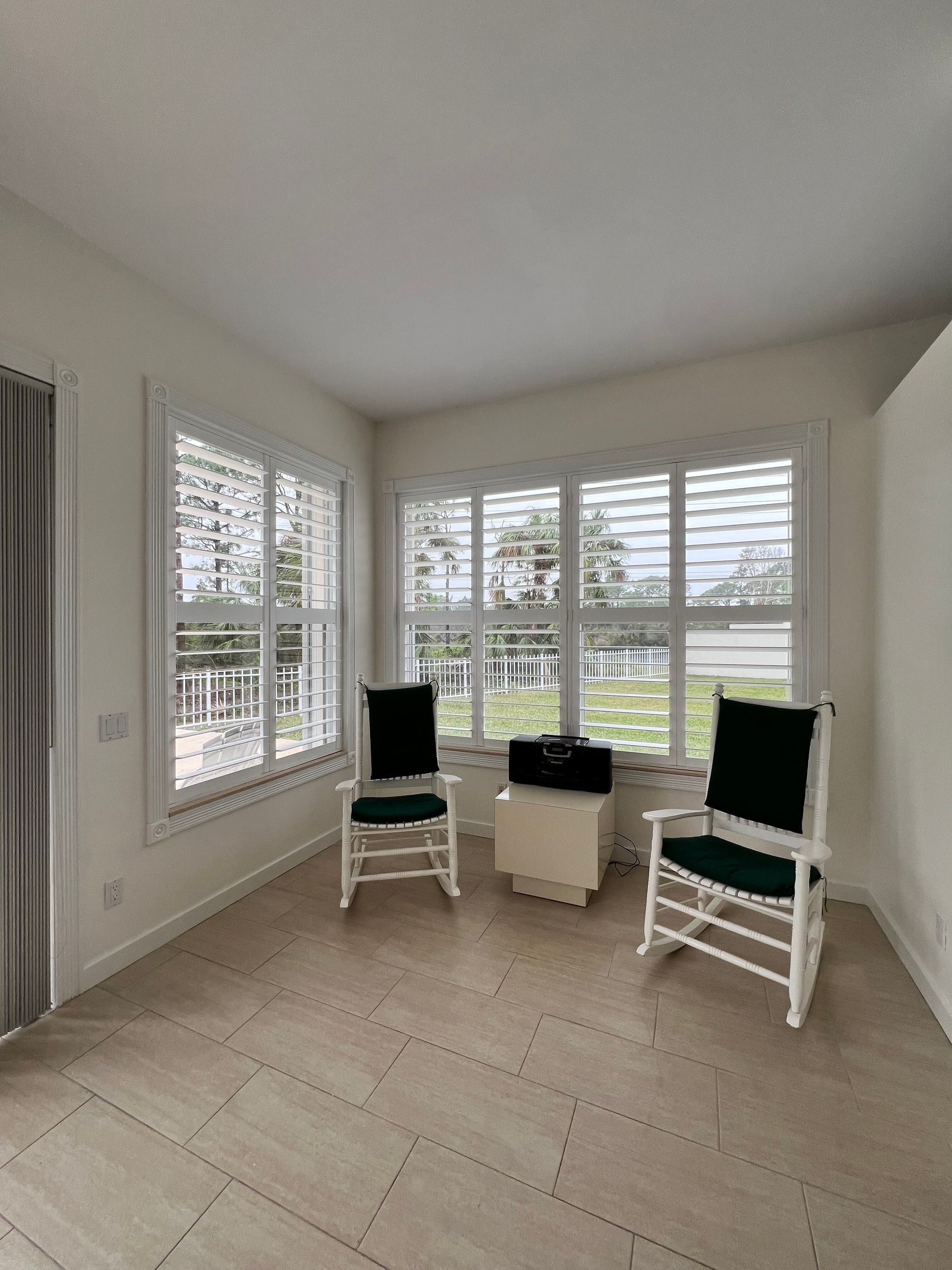
A plantation shutter consists of a frame fitted into or around the window reveal, and one or more panels hinged to that frame. Each panel contains louvres — wide, flat slats, usually larger than the slats on a Venetian blind — that are linked so they tilt together. Tilting the louvres changes how much light enters and how much can be seen through the window, without opening the panel itself. Opening the panel gives full access to the window, for cleaning or for maximum light and air.
There are several common configurations. Full-height shutters cover the whole window with panels that run from top to bottom, giving a uniform look. Tier-on-tier shutters have separate top and bottom panels that operate independently, so the top can be opened while the bottom stays closed, or vice versa. Café-style shutters cover only the lower part of the window, leaving the top open for light and view. Solid-panel shutters have no louvres, or only a small louvred section, and are used where darkness or a traditional look matters more than variable light. For very wide openings, tracked or bi-fold shutters allow panels to slide or fold to one side, rather than swinging as a single door.
Louvre size also matters. Larger louvres give a clearer view when open and fewer gaps when closed, because there are fewer slats in the panel. Smaller louvres give a more detailed look but have more gaps between slats. The choice is partly visual and partly practical: larger louvres are often preferred for large windows and for rooms where a clear view matters.
What problems do plantation shutters solve?
The most common problem is privacy without darkness. In a street-facing room, a curtain or a lowered blind can give privacy but also blocks daylight. A shutter with louvres tilted to block the view from the street, while angled to let daylight in from above, gives privacy at eye level without closing the room off. That balance — light from above, privacy below — is the single most useful thing a shutter does in a front room.
Shutters also solve a glare problem. A television or a computer screen can be difficult to see in direct sun, but closing a blind completely can make the room dark. Tilting louvres can cut direct sun while keeping diffused daylight, so the room stays usable. For a bedroom, shutters give strong room darkening when louvres are closed, although, as explained below, they do not give total blackout on their own.
A further problem is a window that looks untidy with a hanging blind. On a bay window, a tall window, or a window that is opened often, a blind can swing, bunch or look uneven. A framed shutter, made to the window, gives a stable, ordered finish that does not move with draughts or door movement. For homes where a window treatment will stay in place for many years, that stability is part of the appeal.
Key Benefits
Precise, variable light control. Louvres can be opened fully for maximum light, tilted for filtered light, or closed for privacy and room darkening. That range is continuous, not just open or closed, so a room can be adjusted through the day without changing the treatment.
Durable and easy to live with. Shutters have no fabric to fade unevenly in the same way, no long cords to manage, and a solid surface that can be dusted or wiped. Because they are fixed to the window, they do not swing or need to be tied back. That makes them practical for family homes, including homes with children and pets, where a cordless design keeps the window clear. Any cords or chains on other blinds in the home should still be kept out of reach.
A fitted look. A shutter frame is made to the window reveal, so it reads as part of the window rather than as an addition. That can suit both period and modern homes, depending on the material and finish chosen. White and off-white finishes are common because they sit quietly against most décor, but stained wood finishes can give a warmer, more traditional feel where that suits the room.
Where plantation shutters work best
Living rooms
Living rooms, especially street-facing rooms, are the classic shutter room. Louvres can be tilted for privacy while keeping daylight, and panels can be opened fully on a dull day for maximum light. Full-height shutters give a uniform look across a large window, while tier-on-tier shutters give extra flexibility where the top of the window is used for light and the bottom for privacy.
Bedrooms
Bedrooms benefit from the room-darkening effect of closed louvres, but it is important to set expectations correctly. Closed louvres block most light, but small gaps between louvres and around the frame allow some light through. For most sleepers, that is enough for a dark room. For light sleepers, shift workers, or rooms with strong early morning sun, a blackout blind fitted behind the shutter gives a much darker result. That combination — shutter for daytime control and blind for darkness — is often the honest answer for a bedroom where total darkness matters.
Kitchens and bathrooms
Material choice is the key here. Real wood can be affected by sustained humidity, so a bathroom or a steamy kitchen is usually better served by faux wood, composite or PVC-based shutters, which resist moisture and warping more reliably. Shutters in these rooms should still be ventilated and wiped regularly, since steam and cooking marks build up on any surface. A shutter that is easy to wipe, with louvres that can be tilted for cleaning both sides, is more practical than a fabric blind in the same room.
Patio and French doors
Shutters can be fitted to glazed doors, but the format needs care. On a French door, panels can be hinged to the door frame so they move with the door. On a sliding patio door, tracked shutters that slide behind each other, or bi-fold shutters that fold to one side, are needed so the door can still be used. The frame and panel depth must be checked against handles, locks and the way the door slides or folds. If the shutter would stop the door opening fully, or make it awkward to use every day, a vertical blind or a curtain may be more practical for that door.
Bay windows
Bay windows suit shutters well, because each section of the bay can have its own framed panel, giving a tidy, continuous look around the angles. Measuring a bay is more involved than measuring a flat window, since each section has its own angle and depth, and the frame must be made to fit those angles. The result, when done well, is one of the strongest uses for shutters. The cost and fitting time are higher than for a flat window, because there are more panels and more frame work.
Conservatories
Shutters can work on the vertical side panels and doors of a conservatory, where they give light control and a structured look. They do not cover conservatory roof glazing, which needs a blind designed for that angle. Material choice matters in a conservatory, because side panels can get very hot in summer and cold in winter. Aluminium or moisture- and heat-resistant composite materials are often discussed for conservatory side panels, while real wood and some MDF options are less suited to a baking conservatory.
Privacy and light control
Privacy with shutters depends on louvre angle and on whether lights are on inside. During the day, with louvres tilted to block a direct view, a shutter gives strong privacy while letting daylight in. The view from the street is obscured, but the room is not dark. That is different from a blind, which often has to be lowered fully to give the same privacy.
At night, the position changes. With lights on inside and darkness outside, light escapes between louvres in the same way it enters during the day. Closed louvres give much stronger night-time privacy than open louvres, but they do not make the window invisible. A person standing close to the glass outside at night may still see shapes or movement through the gaps between louvres. For a bedroom or a bathroom where night-time privacy is critical, that should be understood before choosing shutters alone.
Light control is where shutters are strongest. Louvres can be angled to direct light onto the ceiling, to cut glare on a screen, or to block direct sun while keeping a view. Larger louvres give fewer gaps and a clearer view when open. Smaller louvres give a finer, more detailed look but have more gaps when closed. The frame itself also matters: a well-fitted frame reduces light around the outside of the panel, leaving only the gaps between louvres as the main source of light leakage.
Thermal performance and energy efficiency
A closed shutter panel adds a layer at the window. The solid panel, the frame and the air between the shutter and the glass slow heat movement more than an open blind or an uncovered window. That can make a room feel less cold near the window in winter and can reduce solar gain in summer when louvres are angled to block direct sun.
The effect should not be overstated. A shutter is not a sealed insulation panel. Air can still move around the frame, and heat still passes through the glass. Solid-panel shutters give more thermal benefit than louvred shutters when closed, because they have fewer gaps, but they also give up the variable light control that is the main reason most people choose louvres. For a room where warmth is the main goal, a cellular blind or a thermal blind, fitted closely, may give a stronger thermal effect than a louvred shutter, while a shutter may give a stronger effect than a standard slatted blind with many gaps. As with thermal blinds, the honest expectation is improved comfort at the window, not a guaranteed reduction in bills.
Materials, colours and finishes
Hardwood: Real timber, often painted or stained. It gives a natural warmth and a premium feel, and can be finished in a wide range of colours. It suits dry, stable rooms such as living rooms and bedrooms. It needs more care in humid rooms, and it can be affected by sustained moisture.
Faux wood / composite: Engineered materials that look like wood but resist moisture and warping more reliably. They are a practical choice for bathrooms, kitchens and conservatory side panels. They are often heavier than hardwood, and the range of finishes can be narrower, although white and off-white options are common.
MDF: A composite material that can be painted and gives a smooth finish at a lower cost than hardwood. It is less suited to very humid rooms, since it can swell if it absorbs water over time. It should be chosen with the room's humidity in mind.
PVC / vinyl: Moisture-resistant and easy to wipe, often used for bathrooms and other wet areas. It can look less like real wood than hardwood or high-quality faux wood, so it suits rooms where practicality matters more than a timber look.
Aluminium: Used for some conservatory and high-humidity applications, where heat and moisture resistance matter more than a timber appearance. It is a specialist choice and should be discussed for the specific window, rather than assumed to suit every room.
Finishes are usually white, off-white or a stained timber tone. White finishes sit quietly in most interiors and make the window feel larger. Stained finishes give warmth and suit period homes or rooms with timber furniture. Custom colours are available in some ranges, but they can add cost and lead time, and they should be checked against the room's other woodwork.
Made-to-measure vs ready-made
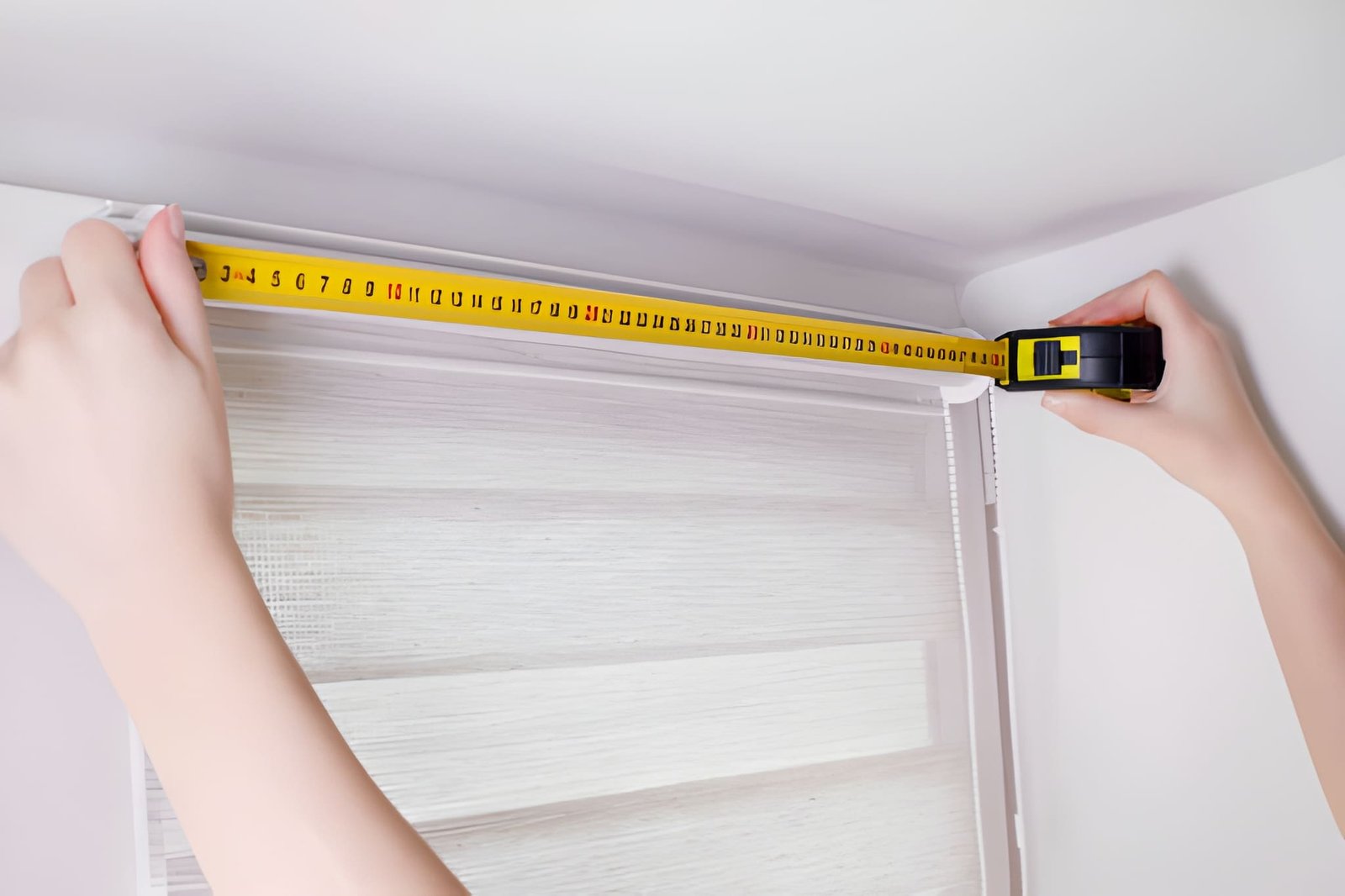
Plantation shutters are, in practice, a made-to-measure product. The frame must match the window reveal, including its depth, angles and any unevenness in the wall. A ready-made shutter panel that is roughly the right size cannot be made to fit a bay, a shaped window or an uneven reveal without gaps or a poor hinge action.
That is why professional measuring and fitting are central to shutters. The measurer checks the reveal depth, the window opening, handle and lock positions, and whether the shutter will be fitted inside the reveal or outside it. The panels and frame are then made to those measurements. Fitting involves fixing the frame, hanging the panels, and checking that louvres tilt smoothly and panels open and close without catching. For a bay or a shaped window, that process is more involved than for a flat window, and it takes longer. Ready-made or DIY shutter kits exist, but they carry a higher risk of a poor fit, especially on bays, older windows or windows that are not square. A shutter that does not sit square will not close cleanly, and louvres may catch.
Things to consider before choosing plantation shutters
Start with how you use the window. Do you need to open the window often for air? Do you need to reach through it, for example to a garden or a balcony? A shutter panel must be opened to give full access, and a fixed shutter on a window that is used as a door will be a daily inconvenience. For a door that is used constantly, check whether tracked or bi-fold shutters, or a different treatment, would be more practical.
Check the reveal and the room around the window. Shutters need enough depth for the frame and for louvres to tilt without catching handles, locks or radiators. A radiator directly below a window can affect how the shutter sits and how heat flows into the room. A window with a deep sill, a projecting handle, or a vent within the frame needs a specific check.
Think about darkness. If you need total darkness for sleep or for shift work, plan for a blackout blind behind the shutter from the start, rather than discovering the gap after fitting. Think about cleaning as well. Louvres need dusting on both sides, and a bay with many panels means more louvres to clean than a single blind.
Finally, think about permanence. Shutters are fixed to the window and are generally left in place if you move. That can be a benefit for a long-term home, but it also means the choice should suit the room for years, not just for a season. A neutral finish is often easier to live with long-term than a very specific colour.
Potential disadvantages / when another blind may be better
Shutters involve a higher initial investment than most blinds, because they are made to measure, use solid materials, and need professional fitting. That investment can be justified by durability and by the fitted look, but it is not the right choice for every budget or for a short-term home. Fitting time is also longer, since panels are made to order and fitted individually.
Shutters are less flexible than blinds or curtains. Once fitted, they cannot be taken down and moved to another window, and their appearance cannot be changed as easily as a curtain fabric. If you like to change a room's look often, a blind or curtain may suit you better. They are also not the best choice for every window. Conservatory roofs, very small windows where the frame would dominate, windows that need to be opened fully and often, and sliding doors where tracked shutters would be awkward, may all be better served by a blind. A louvred shutter also does not give total blackout on its own, as noted above, and a solid-panel shutter that would give more darkness gives up variable light control.
If any of those points apply, consider: a cellular or thermal blind for warmth; a blackout roller or Roman blind for total darkness; a vertical blind for a sliding door or a very wide opening; or a Venetian blind where slat control is wanted without the cost and permanence of a shutter.
Plantation shutters vs similar alternatives
| Feature | Plantation shutters | Wooden blinds | Venetian blinds | Curtains |
|---|---|---|---|---|
| Construction | Framed panels with tilting louvres, fixed to the window | Horizontal wooden slats on cords, raised or lowered | Horizontal aluminium slats, tilted and raised | Fabric panels hung from a track or pole, drawn open or closed |
| Light control | Louvre tilt gives variable control; panels open for full light | Slat tilt gives variable control; blind can be raised fully | Slat tilt gives variable control; blind can be raised fully | Open or drawn, with limited middle positions |
| Privacy | Strong daytime privacy with tilted louvres; good night-time privacy when closed, but not total | Good privacy when slats closed; light can pass between slats at night | Good privacy when slats closed; similar night-time limits | Strong privacy when drawn, but blocks daylight as well |
| Best for | Front rooms, bays, long-term fitted look | Living rooms and bedrooms where a wooden slat look is wanted without a fixed frame | Kitchens and modern rooms where wipeable slats matter | Bedrooms and living rooms where a soft, layered look matters |
| Watch out for | Higher initial investment; fixed to the window; not total blackout alone | Heavier on very large windows; real wood needs care in humid rooms | Gaps between slats; can look less substantial than a shutter | Needs to be drawn for privacy and warmth; fabric needs cleaning |
Measuring and professional fitting
A consultation for shutters starts with the window shape and how it is used. The adviser checks the reveal, the opening, handles, locks, radiators and any vents, and discusses which configuration — full-height, tier-on-tier, café, solid or tracked — suits that window. Samples of material and finish are held against the window and the room's woodwork, because a white that looks clean in a showroom can look stark against warm timber, and a stained finish can look darker in a north-facing room.
Each window is measured individually, including each section of a bay. The frame and panels are then made to those measurements. On fitting, the frame is fixed into or around the reveal, panels are hung and checked for smooth opening and louvre movement, and any catches or stays are adjusted. The fitter checks that the window can still be opened, that handles clear the frame, and that louvres tilt without catching. If a window is found to be unsuitable — for example, because the reveal is too shallow for the frame — that should be explained before manufacture, not at fitting. For homes in Bradford and West Yorkshire, an in-home visit is particularly useful for shutters, because bay windows, period reveals and older frames vary widely, and a shutter that fits one window well may not fit the next without a separate measurement.
Cleaning and maintenance
Shutters are among the easiest window treatments to clean, because the surface is solid and accessible. Dust louvres regularly with a soft cloth, a feather duster, or a vacuum with a brush attachment. Tilt louvres in both directions to reach both sides. For marks, wipe with a lightly damp cloth and, where the material allows, a mild cleaner, then dry promptly. Avoid soaking wood shutters and avoid harsh chemicals, which can damage the finish.
Check hinges and tilt mechanisms from time to time, and keep them free of dust. If a louvre starts to stick or a panel starts to catch, it is worth having it adjusted rather than forcing it, since forcing a panel can damage the hinge or the frame. Faux wood and PVC shutters can generally cope with more wiping than real wood, but the care guidance for the specific material should still be followed. With regular dusting and occasional wiping, shutters can last for many years without needing the laundering or replacement that fabric treatments often require.
Who should choose plantation shutters?
Plantation shutters may suit you if you want a fitted, architectural look that stays in place for many years; have a street-facing room where privacy without darkness matters; want variable light control through louvre tilt, rather than just open or closed; have a bay window or a tall window where a hanging blind would look untidy; want a cordless, solid window treatment that is easy to dust and wipe; or are happy with a higher initial investment for a long-term, fixed treatment. They may not suit you if you need total blackout on their own, frequent unobstructed access through the opening, a treatment you can move to another home, a very low-cost option for a short-term home, or a covering for a conservatory roof. In those cases, a blind, a curtain, or a combination of shutter and blackout blind may be a better first step.
See samples in your own home — book a home consultation to check your reveals, bay angles and louvre sizes before choosing a material.
FAQs
Are plantation shutters blackout?
No, not on their own. Closed louvres block most light and give strong room darkening, but small gaps between louvres and around the frame allow some light through. For total darkness, a blackout blind fitted behind the shutter is the usual solution. That combination gives daytime shutter control and night-time darkness.
Are plantation shutters good for insulation?
A closed shutter panel adds a layer at the window and can improve comfort near the glass, especially in winter. It does not seal the window completely, and heat still passes through the glass. Solid panels give more thermal benefit than louvred panels when closed, but they give up variable light control. They should not be presented as a complete insulation solution.
Can plantation shutters be fitted to bay windows?
Yes, and bays are one of their strongest uses. Each section of the bay gets its own framed panel, giving a tidy look around the angles. Measuring a bay is more involved than measuring a flat window, and fitting takes longer, because each section has its own angle and depth. A professional survey is important for a bay.
Are plantation shutters suitable for bathrooms?
They can be, with the right material. Faux wood, composite or PVC-based shutters resist moisture and warping more reliably than real wood in a humid bathroom. Ventilation still matters, and shutters should be wiped regularly. Avoid placing a real wood shutter where it will be in direct contact with water or sustained steam.
Do plantation shutters work on patio doors?
They can, but the format needs care. Hinged French doors can carry shutter panels that move with the door. Sliding patio doors need tracked shutters that slide behind each other, or bi-fold shutters that fold to one side, so the door can still be used. Handle, lock and fold-back clearance must be checked before ordering.
What is the difference between full-height, tier-on-tier and café style shutters?
Full-height shutters cover the whole window with panels from top to bottom. Tier-on-tier shutters have separate top and bottom panels that operate independently, so you can open the top while keeping the bottom closed. Café-style shutters cover only the lower part of the window, leaving the top open for light and view. The choice depends on how you use light and privacy in that room.
Are wooden or faux wood shutters better?
It depends on the room. Hardwood gives a natural timber look and can be stained or painted, and suits dry rooms. Faux wood and composite materials resist moisture and warping more reliably, and suit bathrooms, kitchens and conservatory side panels. Faux wood can be heavier, and the finish range can be narrower. The room's humidity and the look you want should decide, not the material name alone.
How do you clean plantation shutters?
Dust louvres regularly with a soft cloth, feather duster or vacuum brush attachment, tilting louvres both ways to reach both sides. Wipe marks with a lightly damp cloth and, where the material allows, a mild cleaner, then dry promptly. Avoid soaking real wood shutters and avoid harsh chemicals. Check hinges and tilt mechanisms from time to time.
Do plantation shutters give privacy at night?
Closed louvres give much stronger night-time privacy than open louvres, but they do not make the window invisible. With lights on inside, some light and shapes can still be seen through gaps between louvres. For a bedroom or bathroom where night-time privacy is critical, discuss whether a blind behind the shutter would help.
Can plantation shutters be fitted to shaped windows?
Many shaped windows, such as arches and triangles, can be fitted with made-to-measure shutters, but the design needs a specific survey. The panel shape, louvre direction and frame must be made for that window, and some shapes may need a fixed panel rather than an opening panel. A standard blind may be more practical for a very unusual shape.
Are plantation shutters suitable for conservatories?
They can work on vertical side panels and doors, where they give light control and a structured look. They do not cover conservatory roof glazing, which needs a roof blind. Material choice matters in a conservatory, because side panels can get very hot and humid. Aluminium or heat- and moisture-resistant composite materials are often discussed for side panels.
How long do plantation shutters last?
With regular dusting and appropriate care, quality shutters can last for many years and are often left in place as a fixed feature of the home. Lifespan depends on material, room humidity, and how well hinges and louvres are maintained. Real wood in a dry room and faux wood in a humid room will generally last longer than the wrong material in the wrong room.