Wooden blinds are made from horizontal slats of timber or faux-wood, held by cords or fabric tapes and tilted to control light. They share the tilting idea with aluminium Venetian blinds, but they are not the same product. Timber slats are thicker, heavier and warmer to look at, and they show natural grain. Faux-wood slats are made from PVC or a composite, designed to look like wood while handling moisture and cleaning differently. The choice between real wood and faux-wood is the most important decision on this page, and it should be made room by room, not once for the whole house.
What are wooden blinds?
Horizontal slats, usually in basswood or a similar hardwood for real wood blinds, or in PVC or a composite for faux-wood blinds, are suspended from a headrail by ladder cords or tapes. A tilt wand or cord rotates the slats, and a separate cord raises the blind. When slats are open, light passes between them. When tilted, light is directed and privacy is increased. When closed, slats overlap and give shade and privacy.
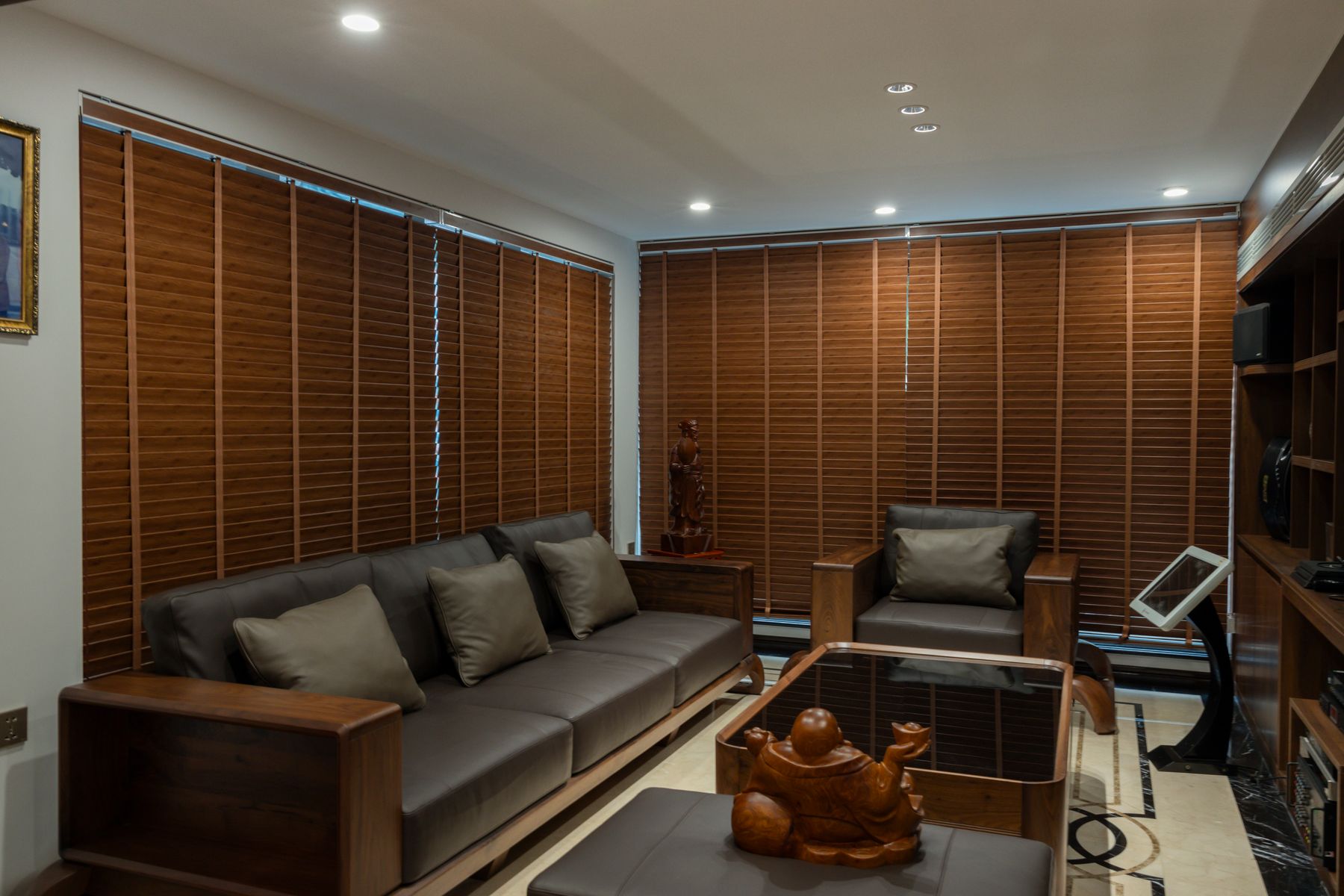
Real wood slats show grain, knots and colour variation, because each slat is cut from timber. That variation is part of the appeal, and it also means no two blinds look exactly alike. Faux-wood slats are manufactured to a consistent finish, with a wood-grain effect printed or moulded onto the surface. They can look very convincing from a normal viewing distance, especially in white or a pale grain, but they do not have the same variation as real timber up close.
Slat width matters. Narrower slats give a finer look and suit smaller windows. Wider slats, commonly around 50mm, give fewer lines across the glass and a bolder, more substantial look, but they are thicker and heavier, and they stack into a deeper bundle when the blind is raised. That stack can block a noticeable part of the window when the blind is fully open, which is worth checking on a window where the view matters.
What problems do wooden blinds solve?
The first problem is warmth. A room with hard floors, white walls and modern furniture can feel cold and flat. Timber slats add a natural material and a warm tone that softens the room without needing a fabric treatment. A second problem is light control with a substantial look. A thin aluminium slat gives precise tilt, but it can feel light and insubstantial in a large window. A timber slat gives the same tilt control with a more solid presence, and the thicker slat blocks light more effectively when closed, though it does not give full blackout. A third problem is a room that needs a blind that looks like part of the joinery — for example, a bay window with timber frames, a room with wooden floors, or a period interior where a metal blind would feel out of place.
Key Benefits
Natural appearance and grain. Real wood blinds bring a material that cannot be replicated exactly by a manufactured finish. The grain, the tone and the way light falls across the slats give a room a warmth that is difficult to achieve with metal or fabric alone.
Precise tilt control, with substance. Like Venetian blinds, wooden blinds tilt to control glare and privacy. The thicker slat gives a more solid feel when tilted, and the blind feels more substantial to operate, which suits a larger window where a thin slat might feel flimsy.
Durability in dry rooms. In a dry living room or bedroom, a well-made wooden blind is a long-lasting treatment. Timber is strong, and the slats do not bend as readily as thin aluminium. That durability depends on the room staying dry and on the blind being cleaned and operated with care.
Faux-wood versatility. Faux-wood blinds give the look of wood in rooms where real wood would be a poor choice. They handle moisture, wipe clean, and are available in crisp whites and pale grains that are difficult to achieve consistently in real timber.
A good match for bay windows. Wooden blinds can be fitted to each section of a bay, with each blind operated separately. The timber look suits many bay windows, especially in period properties, and the separate blinds give control over sun that moves around the bay through the day.
Where wooden blinds work best
Living rooms
This is a strong room for wooden blinds. A living-room window with timber slats, tilted to cut glare while keeping daylight, gives both control and character. Real wood suits a room where the grain will be seen and appreciated, and where the room is dry and well ventilated.
Bedrooms
Wooden blinds work well in bedrooms where a warm, substantial look is wanted and where full blackout is not the main priority. Closed timber slats darken a room considerably, but light passes through cord holes and around edges, so a bedroom that needs to be as dark as possible may need a second layer, such as curtains or a blackout roller blind behind the wooden blind.
Kitchens
Real wood is not the best choice for a kitchen where steam, cooking splashes and humidity are daily facts. Faux-wood blinds are the safer route here: they wipe clean, do not warp with steam, and give the same timber look. If real wood is strongly preferred for a kitchen, it should be in a well-ventilated kitchen away from direct steam, and the risk of warping should be understood.
Bathrooms
The same logic applies, more strongly. A bathroom with daily shower steam is a poor room for real wood blinds, as sustained moisture can cause slats to warp, swell or crack over time, especially if the finish is damaged. Faux-wood blinds are the practical choice for a bathroom, as they handle steam without that risk.
Bay windows
Wooden blinds suit bay windows, especially where the bay has timber frames or a traditional look. Each section can be fitted separately, which helps with sun control around the bay. Weight needs to be checked: a bay with several large wooden blinds is heavier than a bay with aluminium blinds, and the fixing needs to be sound, especially on a plasterboard ceiling or a bay structure that is not solid.
Conservatories
Wooden blinds can be used on conservatory side windows, but heat and sun are stronger in a conservatory than in a normal room, and real wood can fade in prolonged direct sun. Faux-wood may be more stable in a conservatory, and the room's heat problem should be considered alongside the blind choice, as a blind alone will not solve overheating.
Patio and French doors
Wooden blinds can be fitted to doors, but they are less convenient than vertical blinds for a door used constantly, because the blind must be raised to walk through and the slats can catch on handles. A Perfect Fit system, which holds the blind against the door frame, is often a better route for a door.
Privacy and light control
During the day, tilted timber slats give strong privacy while keeping daylight. The thicker slat blocks the view in more effectively than a thin aluminium slat at the same angle, and the person inside can still see out through the gaps. At night, when lights are on inside, closed timber slats give privacy, but light can still pass through cord holes, around edges and between slats that do not sit perfectly flat. For a room overlooked after dark, fully closed slats plus a second layer may be needed for complete privacy. For glare, the tilt is the tool, as with Venetian blinds. A small tilt cuts direct sun on a screen or worktop without darkening the room.
Thermal performance and energy efficiency
Timber is a poorer conductor of heat than aluminium, so closed wooden slats can help a room feel less cold near a window in winter and can reduce solar gain in summer by blocking direct sun. That effect is modest and depends on the fit, the slat thickness and whether the blind is closed when the sun is strongest. Gaps between slats, at the sides and at the top and bottom limit the effect, as they do for any slatted blind. A wooden blind is not insulation on its own, and it should not be presented as a substitute for double glazing, draught-proofing or insulation. Faux-wood slats behave differently: they are denser and heavier, and they do not have the same insulating character as timber, but they also do not warp with moisture, which can be more important in a kitchen or bathroom than a small thermal difference.
Materials, finishes and slat sizes
Real wood is usually basswood or a similar hardwood, chosen for its light weight relative to other timbers and for its smooth grain. Finishes include natural stains that show grain, painted finishes in whites and neutrals, and darker stains for a more traditional look. A painted real-wood blind gives a wider colour choice, but the paint can chip if slats are knocked, and the underlying wood still needs to be kept dry.
Faux-wood is PVC or a composite, with a wood-grain effect. It is available in whites, creams, pale grains and darker wood effects. It is heavier than real wood of the same size, which matters on a large window. It is also more consistent in colour, which suits a room where several blinds need to match exactly.
Slat sizes commonly include narrower options for smaller windows and wider options, around 50mm, for larger windows and a bolder look. Wider slats need more recess depth to tilt freely, and they stack deeper when raised. Tapes vs cords also matter. Fabric tapes give a softer, more finished look and can add a colour accent, while cords give a cleaner, more minimal look. Tapes cover cord holes and can reduce light leakage slightly, but they are fabric and can mark if soaked.
Made-to-measure vs ready-made
Ready-made wooden blinds are made to standard sizes. On a standard window, they can be a reasonable fit, but the headrail may not sit neatly in the recess, or the slats may not cover the full width without a gap. On a bay, a wide window or a window with a shallow recess, those gaps are more noticeable, and the weight of the blind makes a poor fixing more obvious.
Made-to-measure wooden blinds are made to the measured window, with the slat width, material, tape or cord ladder, control side and fixing position chosen for that opening. Professional measuring also checks recess depth, handle clearance, radiator position and the fixing surface, which matters more for a heavy blind than for a light one. For a bay or a large window, made-to-measure is usually the more reliable route, and it allows the weight to be split across several smaller blinds if one very wide blind would be too heavy to operate comfortably.
Things to consider before choosing wooden blinds
Room humidity. Real wood in a steamy bathroom or a kitchen with daily cooking steam is a risk. Faux-wood is the safer choice there, even if real wood is preferred elsewhere in the house.
Weight on large windows. Timber and especially faux-wood blinds are heavy on a wide window. A single very wide blind can be difficult to raise and can strain its fixing and cords over time. Splitting a wide window into two or three smaller blinds often works better.
Stack depth when raised. Thick timber slats stack into a deep bundle at the top of the window when fully raised. If the view matters, that stack should be seen before ordering, not discovered after fitting.
Sun fading. Prolonged direct sun can lighten the finish of real wood over time, particularly on a south-facing window. A finish designed to resist fading, or rotating slats regularly, can help, but fading is a natural characteristic of timber, not a fault in a specific blind.
Recess depth and handles. Wider slats need depth to tilt, and a handle that projects into the blind can catch slats. Both should be checked at measurement.
Radiators below the window. A radiator directly below a wooden blind can push warm, dry air up through the slats, which can affect real wood over time.
Children and pets. Cords and chains should be kept out of reach, and cordless or wand-operated options are worth discussing for a family home. Timber slats are more robust than thin aluminium, but they can still be damaged by rough handling.
Colour matching. Real wood varies in tone, so a blind ordered for one window may not match exactly a blind ordered later for another window. If exact matching across several windows matters, faux-wood's consistency may be preferable.
Potential disadvantages / when another blind may be better
Wooden blinds are not the right choice for every room. Real wood can warp, swell or crack in sustained humidity, and it can fade in strong sun. Faux-wood is heavier, which makes very wide blinds harder to operate. Both types stack deeply when raised, and both collect dust on horizontal slats, so cleaning takes time. For a bathroom or kitchen where moisture is daily, faux-wood is better than real wood, but an aluminium Venetian may be even more practical, as it is lighter and wipes clean more readily. For a bedroom where full blackout matters, a blackout roller blind or lined curtains may be better than any slatted blind. For a patio door used constantly, vertical blinds or a Perfect Fit system may be more practical than a wooden blind that must be raised to walk through.
Wooden blinds vs similar alternatives
| Feature | Real wooden blinds | Faux-wood blinds | Aluminium Venetian |
|---|---|---|---|
| Material | Natural timber, grain varies | PVC or composite, consistent finish | Aluminium, light, thin slats |
| Weight | Lighter than faux-wood, heavier than aluminium | Heaviest of the three on a wide window | Lightest, easiest to raise |
| Moisture | Poor in high humidity, can warp | Good, handles steam and splashes | Good, handles steam |
| Cleaning | Dry dust, barely damp cloth, dry immediately | Dust and wipe with damp cloth | Dust and wipe, gentle to avoid bending |
| Look | Warm, natural, substantial | Wood look, crisp whites, consistent | Clean, structured, contemporary |
| Best rooms | Dry living rooms, bedrooms, bays | Kitchens, bathrooms, high-traffic rooms | Kitchens, bathrooms, offices |
Plantation shutters are another alternative that gives a framed, permanent timber look, but they are a different product with a different fixing and a higher initial investment, and they are covered on their own page.
Measuring and professional fitting
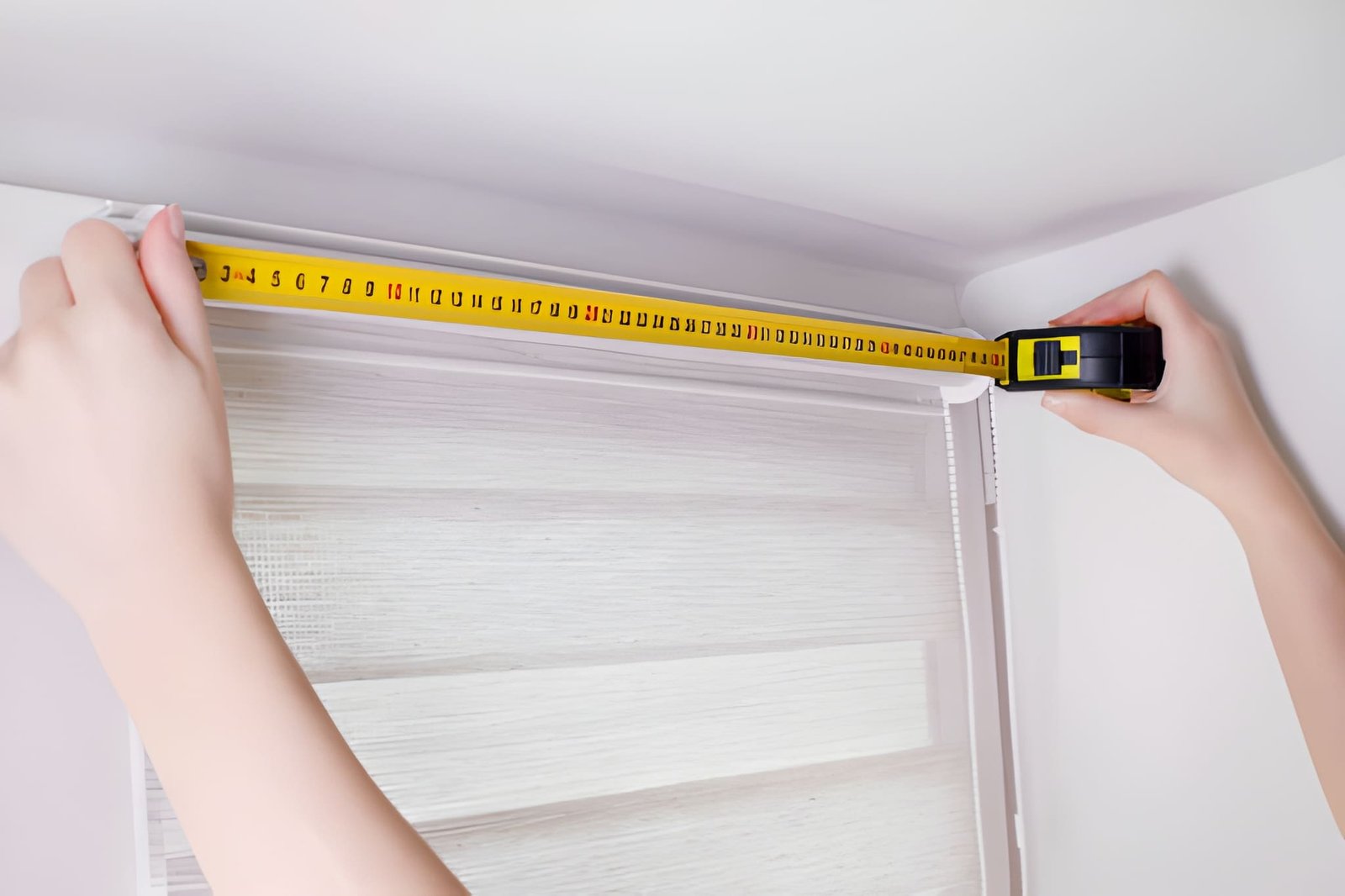
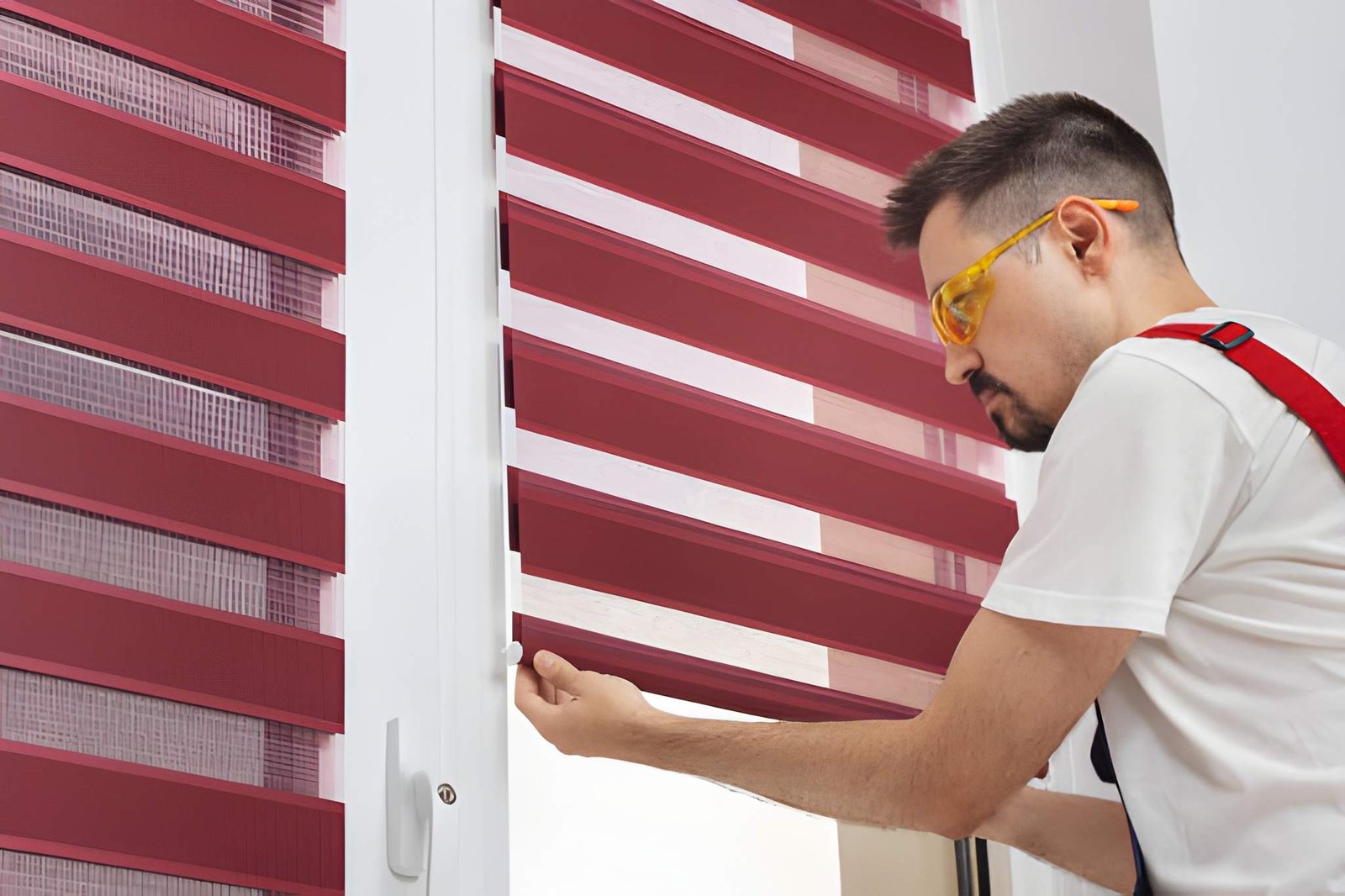
A consultation for wooden blinds starts with the room: how the light moves, whether the room is humid, whether the window is large or part of a bay, and whether real wood or faux-wood is the right material for that room. Samples are then compared in the room, including grain, stain, painted finish and slat width. Measurement checks the width and drop, recess depth, handle clearance, radiator position and the fixing surface, which matters for a heavy blind. The blind is made to those measurements, and fitting includes fixing the headrail level and securely, checking that slats tilt evenly and that the blind raises and lowers without strain. Dream Blinds UK offers a home consultation and measuring service, which is useful for bay windows and large windows where weight and fixing need to be checked in person. In Bradford and the surrounding West Yorkshire area, this also allows the timber finish to be seen against the actual woodwork and daylight in the home. No DIY measurement tolerances are given here, because they vary by product and fixing.
Cleaning and maintenance
Close the slats flat, dust with a microfibre cloth or a vacuum with a brush attachment from top to bottom, then tilt the other way and repeat. For real wood, keep moisture to a minimum. If a mark needs more than dusting, use a barely damp cloth, wipe gently, and dry the slat immediately, especially at the ends where water can wick into the cut edge. Do not soak real wood blinds, do not use steam, and do not let water sit on a slat. For faux-wood, a damp cloth with a small amount of mild detergent will deal with most marks, followed by drying to avoid water spots. Faux-wood can handle more moisture than real wood, but abrasive pads and harsh chemicals should still be avoided. Tapes should be vacuumed with a brush attachment and spot-cleaned with a barely damp cloth, working along the tape rather than scrubbing across it.
Who should choose wooden blinds?
Wooden blinds may suit you if you want warmth and natural grain in a living room, bedroom or bay window; like the substantial look and feel of timber slats and do not mind dusting them; have a dry room where real wood will last well, or a humid room where faux-wood is the right compromise; want precise tilt control with a more solid presence than aluminium; or want a blind that matches timber floors, frames or joinery in the room. They may be less suitable if the room is steamy and real wood is the only option considered, if the window is very wide and weight would make operation difficult, or if full blackout or a soft fabric look is the priority.
See samples in your own home — book a home consultation to compare real wood and faux-wood finishes against your woodwork and daylight.
FAQs
Are wooden blinds suitable for bathrooms?
Real wood blinds are not ideal for a steamy bathroom, as sustained moisture can cause slats to warp, swell or crack. Faux-wood blinds are the practical choice for a bathroom, as they handle steam without that risk and wipe clean. If a bathroom is well ventilated and rarely steamy, the risk is lower, but faux-wood remains the safer recommendation.
Are wooden blinds heavy?
Yes, compared with aluminium blinds, wooden blinds are heavier, and faux-wood blinds are generally heavier than real wood blinds of the same size. On a large window, that weight makes the blind harder to raise and puts more strain on the fixing and cords. Splitting a wide window into smaller blinds often makes operation easier.
Do wooden blinds block light?
Closed timber slats block light considerably and give good privacy, but they do not give complete blackout. Light passes through cord holes and around edges and between slats. If darkness for sleep is the priority, a blackout roller blind or lined curtains may be needed as well as, or instead of, a wooden blind.
How do you clean wooden blinds?
Dust closed slats from top to bottom, then tilt the other way and repeat, using a microfibre cloth or a vacuum brush attachment. For real wood, use a barely damp cloth for marks and dry immediately, and do not soak or steam the slats. For faux-wood, a damp cloth with mild detergent is usually enough, followed by drying.
Are faux-wood blinds as good as real wood?
They are different, not simply better or worse. Faux-wood handles moisture, wipes clean and gives a consistent colour, which makes it better for kitchens, bathrooms and rooms where matching matters. Real wood gives natural grain variation, is lighter, and feels more like timber up close, which makes it better for dry showcase rooms. The right choice depends on the room.
Do wooden blinds fade in sunlight?
Prolonged direct sunlight can lighten the finish of real wood over time, particularly on a south-facing window. A finish designed to resist fading, and rotating slats regularly, can help, but some fading is a natural characteristic of timber. Faux-wood is generally more stable in strong sun, though very dark finishes can still be affected by heat.
Are wooden blinds good for large windows?
They can be, with planning. A large window fitted with one very wide wooden blind will be heavy to operate and will stack deeply when raised. Two or three smaller blinds across the same window are usually easier to operate, put less strain on fixings, and give more flexible light control, as each section can be tilted separately.
Can wooden blinds be fitted to bay windows?
Yes, wooden blinds can be fitted to each section of a bay, with each blind operated separately. Weight and fixing need to be checked, especially on a bay with a plasterboard ceiling or a structure that is not solid, and the headrails need to meet neatly at the angles. Professional measuring is particularly useful for a bay.
What is the difference between wooden and Venetian blinds?
Both use horizontal tilting slats, but wooden blinds use timber or faux-wood slats, which are thicker, heavier and show wood grain. Venetian blinds in this guide use aluminium slats, which are lighter, thinner and wipeable, and suit a more contemporary look. The tilt control is similar, but the weight, care, moisture limits and look are different.
Are wooden blinds suitable for kitchens?
Faux-wood blinds are well suited to kitchens, as they wipe clean and handle steam and splashes. Real wood blinds are less suitable for a kitchen with daily cooking steam, as moisture can cause warping over time. If real wood is preferred, it should be in a well-ventilated kitchen away from direct steam, with the risk understood.